

The National Workshop on Christian Unity (NWCU) adopted as its theme for this year’s gathering in Columbus, Ohio, “What Does God Requires of Us?” (Micah 6:6–8). A variety of speakers addressed plenary sessions including Dr. Karen Westerfield Tucker, Professor of Worship at Boston University School of Theology; Ms. Kathryn Lohre, Director for Ecumenical and Inter-Religious for the ELCA and the President of the National Council of Churches; Bishop Emeritus Don McCoid (ELCA) and Rev. Leo Walsh (Catholic). Nine different seminars were also offered. (Attenders could only go to three over the course of two full days.)
The various denominational networks, listed in yesterday’s post, met during the day on Monday. The opening session of the NWCU was on Monday evening, April 8, at St. Joseph’s Cathedral. St. Joseph’s is the cathedral church of the diocese of Columbus. This magnificent service of worship was one of the best ecumenical liturgical services of worship I have ever attended. Representatives of many churches contributed. The sermon, based on the theme text in Micah, was delivered by the 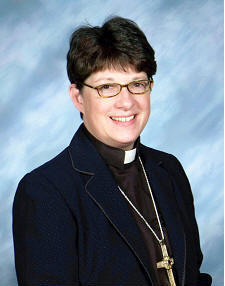 Rev. Elizabeth Eaton, the bishop of the Northeast Ohio Synod of the ELCA. Of the sermons preached in the three evening worship services this was, by far, the most biblically clear and textually informed of all the homilies given at the NWCU. I had the privilege of meeting Bishop Eaton in the reception that followed and thanked her for a solid sermon. The service was noteworthy for the depth, and breadth of the liturgy. The prayers were rich. The readings were well done. Clergy and laity from perhaps a dozen different churches/traditions/denominations led us. One of the more meaningful moments, at least for me, was the recession of several ministers who recessed back down the center aisle of the cathedral and then processed to the front again while sprinkling water, with palm branches, upon the congregants. This served as a powerful reminder of our common baptismal vows. As drops of water fell on me, and my bulletin, there was something very powerful about this liturgical reminder of my standing in Christ and of our unity with all the baptized. The music of the evening was classical and majestic. All in all it was a memorable service of praise that centered on Christ, grace, unity and Christian service. I walked back to our hotel, about six blocks away, and along the way I engaged in conversation with a Lutheran pastor, Rev. Robert Springer of Northfield Center, Ohio. Bob and I connected easily and then had a wonderful dialogue about ecumenism, past and present. He is a veteran of these kinds of events and shared a great deal with me about his hopes and dreams from years in this movement. I hope and pray, and seem to think, that I was an encouragement to Bob as I shared my own story of praying and working for Christian unity, especially among evangelical Protestants.
Tuesday was a day for seminar sessions in the morning and afternoon, as well as a plenary session at mid-day. The seminar I attend on Tuesday morning was titled “Our Common Baptism: Rites of Initiation and Catechesis.” This meeting was led by Rev. Dan Benedict, a retired Methodist presbyter/elder from Hawaii. Dan is the author of Come to the Waters , a book on welcoming seekers and making disciples. I bought a copy and have found it a useful guide for parish ministry that seeks to reach and disciple outsiders. Dan was joined in leading this seminar by Rev. Bev Piro, a Lutheran (ELCA) pastor from Seattle. The premise of this seminar was that there is a remarkable convergence among Christians regarding the role of baptism, both theologically and practically, that has occurred since the 1960s. This seminar explored the ecumenical significance of our rites of initiation into the Christian community, with a special emphasis on the recovery of the formative process of the catechumenate.
The word catechumen (Latin, catechumenus, and Greek, κατηχούμενος, instructed – from κατά (kata), “‘down’” + ἠχή (ēkhē), “‘sound’”) refers to the one who is receiving instruction from a catechist (teacher) in the principles of the Christian faith with a view to baptism. The title and practice is most often used by Catholic and Orthodox Churches but more and more it has been embraced by Protestant traditions who see it as both ancient and deeply biblical.
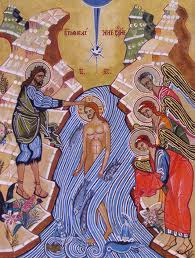 The catechumenate is a process of faith formation and discipling that began in the early centuries of the Christian Church — that has been reclaimed in the twentieth century, primarily as a result of the work of the Roman Catholic Church in the development of the Rite of Christian Initiation for Adults (RICA). During the past two decades non-catholic Christian churches have slowly begun to understand the catechumenate as a process of faith formation and spiritual development for twenty-first century people who have little or no previous association with the Christian faith. The catechumenate is also being adapted in congregations for renewing the process of how those baptized as infants and children are confirmed and in the affirmation of baptism, or the reaffirmation of the baptismal covenant, by those already baptized.
The catechumenate focuses on the development of the disciplines of faith: corporate worship, the study of Scripture, prayer, and baptismal living. The process is countercultural in that it is
- process-oriented rather than program-oriented,
- lay-led rather than clergy dominated,
- information about Christ.
Through the catechumenate, adults who are on a spiritual quest are offered an apprenticeship in the life of faith and those already baptized are aided in the deepening of their faith and commitment.
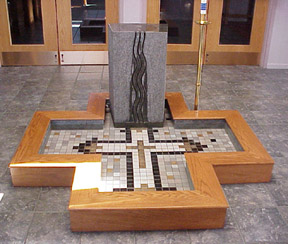 This seminar encouraged conversation about how various churches were engaging in the faith formation of adults who have not been baptized and who wish to begin a process of faith formation leading them to baptism and full membership in the Christian church. The key emphasis, one which all Christians could learn from, was on “doing church with a front porch.” The “porch” metaphor captured the idea of domestic hospitality and how our churches can welcome seekers into the reign of God through stories and personal explorations.
It was suggested that the catechumenate could be undertaken together, as a joint effort of churches working in unity. This idea particularly excited me because it provides a way to reveal our inherent unity, in teaching and forming the faith of unchurched adults. The suggestion that really got my attention was made when the presenters suggested that churches could share the Easter Vigil, the Saturday evening service of Holy Week after Good Friday, with other congregations. Why the Easter Vigil? For one reason it reminds us that all Christians are awaiting for the one event that shapes all of us directly – the resurrection. Second, since there is no communion/eucharist during the Easter Vigil we face no difficulty in sharing together publicly in every way.
Some of my readers, especially non-liturgical evangelicals, will have doubts about all of this. Why? They have embraced only one idea about entry into the church, namely that of conversion (very often identified as a sudden event whereby a person “accepts Jesus” into their heart and life). This is not wrong but it can be very limiting. The idea of a more formal, gradual practice, leading a person into deep and growing faith and membership in the Christian church, is seen with some suspicion by evangelicals. Yet the divergence between these two Christian practices is, in my view, very often one of appearance rather than substance. We do read in the Book of Acts that Paul, a Jewish persecutor of the Church, underwent sudden conversion on the Damascus road when Jesus Christ appeared to him in a vision. This event, regarded as the type of sudden conversion, was followed by his baptism. But his baptism was also followed, as its often not acknowledged by many evangelicals, by an intense period of study and learning that lasted a number of years, maybe as much as a decade or more. While there are examples of people being immediately baptized after having declared their faith, within the New Testament itself, it seems that this was the exception rather than the rule both in the Bible and in early church history. While I believe in the idea of sudden conversion, having had such an experience as a young boy in a Baptist home, I do not in any way believe that this idea is incompatible with the catechumenate. Quite the opposite.
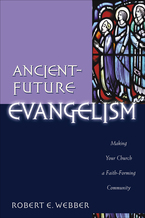 My teacher and dear friend, the late Robert E. Webber, wrote a great book on this question: Ancient-Future Evangelism: Making Your Church a Faith Forming Community (Grand Rapids: Baker, 2003). Bob made this point so well toward the end of his life. Evangelicals would mature, and be better able to address the world which is now early 21st century America, if they developed some of these ancient practices more thoughtfully. They could do this if they followed these simple ideas:
- Do not reject, sight unseen, everything from the older, more liturgical Protestant churches that have remained closer to the practice of Catholic and Orthodox Churches.
- Embrace the idea of the church giving non-Christians a “porch” where they can sit down and talk to us about faith and openly explore our faith claims and beliefs in some depth before we even call for conversion, or accepting Jesus, as the norm. Make this a both/and solution, not an either/or one.
- Understand that many churches are defined too narrowly by what they are not, rather than by what they are. Become pro-active in shaping the practice of your congregation if you influence it as a leader in some capacity.
- Practice missional-ecumenism and thereby learn from other churches. Share in ways to reach and shape the faith life of a variety of people, many of whom resist the “conversionism” model of evangelism because of a bad experience they have had with it in our culture. This will require us to recognize that there is not one single expression of deep and lasting change that comes through gospel conversion.
One of the many reasons why I engage in such ecumenical experiences was underscored once again by my time in Columbus. There is so much that I can learn first-hand from other Christians if I take the time to share fellowship, meals and mutual learning. Try it, you just might find that you do not know everything as well as you thought and you will likely learn a great deal by being with other Christians who are not like you or your church background. What have you got to lose, unless it is your deep fear of trusting people that you really do not know at all?



Evangelist Asad Asghar liked this on Facebook.
Lijo Devadhas liked this on Facebook.
Roger LeBlanc liked this on Facebook.