

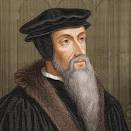
 Sixteenth-century Protestant Reformers stressed that we are justified while still in our sins. I believe they were right. We are, as they put it, simultaneously justified and still sinful. The Reformers, including the Augustinian Martin Luther, were zealous for the sovereignty of God. Many of their modern heirs remain zealous for this great truth. I see this zeal as inherently good. Yet this Reformation emphasis on God and free grace can very easily create a new imbalance, one which I think has been emphasized by Reformed and Lutheran scholasticism and its profound impact upon modern conservatives. It is a fact that post-Reformational orthodoxy tended to ignore the devotional life, or at least downplayed it considerably. (Again, John Calvin is a wonderful exception!) This over-emphasis on grace – especially the emphasis on right doctrinal concepts – led to a sterile and dead orthodoxy in some contexts.
Servile and dead orthodoxy became the deep concern of three groups of Protestants who had a great impact upon the eighteenth-century awakenings; e.g. the Puritans, the Pietists and the Evangelicals who were associated with this awakening. The result was a movement that ignored both sacramental and ecclesial concerns clearly present in the first Reformers. “They
Donald Bloesch, who routinely sought for a richer and deeper evangelical and ecumenical theology, said: “The Christian life is the arena or theatre of our redemption and not simply an effect or sign of this redemption. It is the battleground on which our salvation is continually fought for and recovered” (The Christian Life and Salvation, 17). After living my adult life in evangelical and Reformed communities (where Puritanism held a healthy sway over much I learned and practiced) I have concluded that Bloesch was profoundly correct. He writes, “The Christian cannot earn his salvation, but he is called to retain it and defend it” (18).
Please read the Donald Bloesch quotation above once again. It is striking. It will quite likely jar you at first. It is paradoxical in the best sense. It also preserves the truth that I have discovered within the context of my own ecumenical journey. (This last sentence will create fear in those who wish to defend one of the previous ways in which this battle has been fought between Catholic and Protestant, even between Protestant and Protestant!) The way forward is to revisit these historic tensions, survey where they have brought us, and then consider how we can learn from them and move forward in biblically creative ways. This is the work of good ecumenical theology at its best.



Many thanks for this John, as usual, it is very helpful in correcting the imbalance brought about by excessive loyalty to various church traditions and membership of particular wings. Your quotation from Bloesch is very apposite as I sit here preparing a sermon for Sunday morning on Philippians 2.12-18.
Just like Raylan Givens.
Joe Jewell, only insiders who know Raylan’s story, like you and me, probably get it. I am still laughing. 🙂 Maybe growing up in the general region of Harlan County helps.
Daniel E Arciaga liked this on Facebook.
Denise Murphy Plichta liked this on Facebook.
Forrest Lee Horn liked this on Facebook.
Gilbert Franklin Douglas III liked this on Facebook.
Joe Jewell liked this on Facebook.
John Ross liked this on Facebook.