

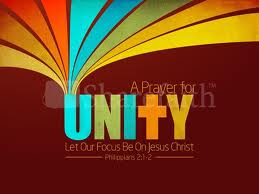
 Over time I have come to understand that deep Christian ecumenism is essential to the well-being and genuine faithfulness of the whole church. This is true precisely because no one “member” of the body of Christ has gained all the truth for all time. Further, without each other we will continue to miss what God is saying to the whole (catholic) church. The Spirit leads us into truth through the process of listening, receiving and applying. The full and final understanding of all that this means will remain inscrutable to us unless we discover the truth relationally. This means we must learn how to seek it together. My understanding here has to be right since our Lord prayed for the unity of all “those who will believe in me through their (the disciples’) word” (John 17:20). No one who believes the gospel is left out. Since our Lord alone “knows those who are his” (2 Timothy 2:19) we should “love one another deeply from the heart” (1 Peter 1:22). Judging one another because we disagree is dangerous and rarely done well, especially by individuals who make judgments all by themselves. True judging is done by the whole church. In the New Testament this is a group process, not a private judgment made by one person or by a small (pure) group of persons!
While 1 Corinthians 11 is clearly referring to the gifts of the Spirit operating in a local congregation, Paul’s Letter to the Ephesians seems to refer to the collected churches in the large area of Ephesus. If this is true then the “members” that Paul refers to in the diverse body of Christ include various churches, not just individual persons in a single local church. This view lines up well with the words we see here in John 17 since he prays (verse 21) “that they may all be one.”
Time and again I’ve encouraged congregations to find ways to express their unity with Christ, and each other, in a specific city or region. One example in which this can be easily done is a community Thanksgiving service. Another is a shared Good Friday service. Still another is joining together for a non-liturgical gathering like the global Week of Prayer for Christian Unity, an event which is held each January. I have heard pastors say, with great confidence, that they would never participate in a joint service because they lead a “Bible believing” church. They often quote the text: “Do not be mismatched with unbelievers. For what partnership is there between righteousness and lawlessness? Or what fellowship is there between light and darkness?” (2 Corinthians 6:14, NRSV). I have wondered, when I hear this verse used as a proof-text, if it ever dawned on such a person to ask: “What do you think God was doing in the incarnation if it was not a marvelous instance of light seeking fellowship with darkness?” The point here is not to compromise the good news. The point is that such a misuse of Paul’s words, a use which justifies refusing fellowship with other baptized and confessing Christians, is far from the actual context of what Paul was writing about in 2 Corinthians 6! What we should rather ask is this: What is meant by “fellowship” and how do we conceive of the visible church and our fellowship with one another? Further, what are the anxiety-producing dangers that are real when we associate with others in the body of Christ? And what does Jesus mean when he says: “Whoever is not against us is for us?” (Mark 9:40).



Dan Tomberlin liked this on Facebook.
Adam Shields liked this on Facebook.
Lori Bragg Harris liked this on Facebook.
Scotty J. Williams liked this on Facebook.
Ed Holm liked this on Facebook.
Bill Meinel liked this on Facebook.
Daniel McDonald liked this on Facebook.