Gaudet Sunday: Advent 3 “Rejoice”
https://soundcloud.com/act3network/the-third-sunday-of-advent-rejoice?in=act3network/sets/sermons#t=0:01


https://soundcloud.com/act3network/the-third-sunday-of-advent-rejoice?in=act3network/sets/sermons#t=0:01
This summer my local congregation, Lutheran Church of the Master, is engaged with a series of sermons from Revelation 2-3. I am filling in for our pastor for many Saturday evening vespers services. So far I have preached on the first three churches of the Revelation. Here is the first, The Letter of Jesus to the Church in Ephesus.
Note: These seven letters were all given by Jesus to John to deliver to the angel/messenger/bishop of each church.
The kingdom of Jesus turns everything “upside down.” We settle far too easily for a tame and non-threatening gospel where grace does not surprise us. This sermon was preached at Lutheran Church of the Master, Carol Stream, IL, on June 11-12. I share it because I hope it will edify and encourage you if you like to hear a biblical sermon as an audio file.
 My question will likely startle some. It seems obvious to others. Count me among the latter group. I have read the book many, many times but it has never seemed clearly apparent to me that it belongs, even among the books that we call the “wisdom literature.”
I recently read Ecclesiastes again, this time in The Message. Same question: Why is it here? How does it belong?
The writer undertakes an investigation of experience at all levels. He asks questions about creation, justice, the wise versus the foolish, and the just versus the unjust. He insists that though God is sovereign over all things we cannot know exactly what God is doing or why he is doing it. What then is our proper human response? To take what we get now and use it as best we can. (Here is the observation that I wish I had learned much sooner! I tried to connect the dots of providence in my life overmuch and quite often I did so way too simplistically.)
So when various theologians and preachers tell you […]
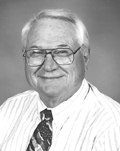 Dr. Ben Campbell Johnson, a Presbyterian minister, and author, served as Professor of Evangelism and Director of Spirituality at Columbia Theological Seminary in Decatur, Georgia (1981-2000). Since his retirement at CTS Ben has been a professor emeritus and taught many classes, written more books, and touched countless lives. I read several Ben Johnson books decades ago. Several of his better books are Hearing God’s Call, Life’s Transitions, and To Pray God’s Will. Ben was a Presbyterian pastor and a leader with a heart for reaching out to those way outside the church. He was also a practitioner of deep spirituality. I see the two as vitally connected thus I had admired Ben Johnson from a distance but never dreamed I would get to meet him in this life. Then last fall a serendipitous moment happened on a glorious October day in Decatur (GA).
Pietism produced many expressions and forms. In the end, Pietism was a rival/renewal movement in the centuries following the Reformed and Lutheran Reformations of the sixteenth century. I personally believe the post-Reformation produced a new type of scholasticism that help to reduce the flame of reformation to a flicker. Pietism is quite often seen by modern Reformed and Lutheran confessional adherents as a bad development. If you believe in church renewal and the work of the Spirit you should rethink this idea.
The Assemblies of God maintains an official heritage center called the Flower Pentecostal Heritage Center (FPHC) in Springfield, Missouri. Dr. Darrin Rodgers is the director of the Flower Center. In this video he addresses the important question of the relationship of the Pentecostal renewal in the last century with the movement of Pietism in the post-Reformation era. It strikes me that honest historical research, which is not built on anti-Pentecostalism, cannot help but draw the conclusions that Dr. Rodgers makes in this helpful video.
On Monday, May 23, the next ACT3 Cohort begins in Carol Stream, IL. We meet in the beautiful garden room at Windsor Park on Rt. 64.
If you are interested in being a participant in this dynamic group you need to decide in the next ten days or so. This will be the best multi-denominational and multi-ethnic group I’ve had in the four-plus years we’ve trained leaders in this context. Remember, this is NOT for clergy only at all. In fact, most of those who come to the Cohorts are not clergy. Contact me directly with any questions.
If the price tag is too steep please let me know your need as I am seeking scholarship monies for all who have genuine need.
The first ACT3 Monday Evening Forum of 2016 takes place this evening at 7:00 p.m. My guest is Dr. Jon Nilson, professor of theology emeritus at Loyola University in Chicago. The topic is:
“Good Theology Must Be Ecumenical: Why & How?”
Dr. Jon Nilson in dialogue with Dr. John H. Armstrong
We begin at 7:00 p.m. and end at 8:30 p.m. We meet at Lutheran Church of the Master, 580 Kuhn Road, Carol Stream, IL 60188. There is no charge and no registration. Please come and share your questions with us all. There will be no audio or video taping. I do not have the resources to do this well and no one to help me do it.
Since the 1970s we have had a raging debate about singing and music in the church. This debate has often come down to “traditional” music, or (old) hymns, versus “modern,” or popular music. The real truth is that the great influence on church music has been a combination of the charismatic influence, much of which is good in directing our hearts to God in personal praise, and the popular songs of television and pop-culture. This “performance” music is not good, at least in my view. Why?
People do not participate in “praying twice” (St. Augustine) as much as they watch and observe and see a professional production of varying quality. On contrast, pietism went right to the heart of people when they sang their faith. What happens if we cease to express our communion in the common faith in deep and thoughtful ways?

Contact me at johna1949@gmail.com
© Copyright 2021 John H. Armstrong. all rights reserved.
Web design by Benjamin Wechsler