

In writing about the religious conditions in the nation at the middle of the last century Ross Douthat says, “the most striking features of
There were four figures who embodied his time of convergence. The intellectual giant was Reinhold Niebuhr, a public theologian who was taken seriously by people of all stripes and backgrounds. The revivalist was Billy Graham. Graham’s style is accurately described as “ecumenical, openhanded, confident, American.” He was clearly a major break with the fundamentalist past of revivalism. The Catholic face of this era was Bishop Fulton J. Sheen, a transition figure of major influence in the Catholic Church in America. Sheen was both an effective preacher and a great apologist for the Catholic Church. But the most widely known religious figure in mid-century American Christianity was the black Baptist, Martin Luther King, Jr. It was King who stressed unity and solidarity to the greatest effect. And it was King who helped us understand that we should be “Christian in all our action[s].” He succeeded in winning over white Christians at a critical time of change and helped connect private faith to public theology.
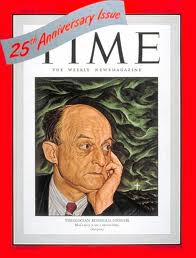 Douhat provides, in telling the story of these four great religious figures, an interpretation of this era, not “a comprehensive history.” He admits that a different set of emphases could “yield a very different portrait of American Christianity at midcentury.” He adds, “True golden ages do not exist.” Were the heresies that now flourish present then? Most definitely. Douthat reminds us of the appeal of men like Normal Vincent Peale, who was a forerunner of the prosperity gospel of our time. “Nevertheless, there were still great differences between their era and our own, and the continuities should not obscure the dramatic changes that overtook the nation’s religious culture after the postwar revival ran its course.”
At midcentury American Christians held a “relatively secure position from which to engage with society as a whole–a foundation that had been rebuilt . . . rather than simply inherited, and that seemed the stronger for it.”
“For a fleeting historical moment, it seemed that Christian church . . . might become something more like what the Gospels suggested they should be: the salt of the earth, a light to the nations, and a place where even modern man could find a home.” But this would all change over the next four decades.
Related Posts


Comments
Comments are closed.


Thanks, John.