Teaching Leaders in Indiana: Proclaim As One

By |2021-07-02T06:16:05-05:00November 14th, 2012|Categories: ACT 3, Gospel/Good News, Missional-Ecumenism, Unity of the Church|

Yesterday, November 13, I led a day-long retreat for Christians leaders in Anderson, Indiana. I enjoyed meeting with, and connecting with, pastors and leaders of Proclaim, a ministry that began several years ago.

Proclaim is a group of congregations and individuals, situated northeast of Indianapolis, Indiana, that is dedicated to proclaiming the Good News of Jesus. Proclaim desires to be an Anderson area network that proclaims the message of John 17:20-24 in the preaching of the gospel of Jesus Christ to all men, women, and children regardless of their race, background, family history, personal history, financial status, education, religious affiliation, temperament, occupation, or location.

Proclaim has one simple mission–to be a ministry called out by God as a coalition of Christian congregations seeking Christ’s unity in the environment of diversity, shaped by a confession that God’s kingdom matters most, empowered by Christ’s commission to transform our neighborhoods into a place of grace, and functioning as a strong, yet flexible community that makes ministry in unity possible.

I am profoundly pleased with what I saw and experienced in Anderson. This is another illustration of how the vision I outline in my […]
Evaluating the Spiritual State of the Nation (2)

By |2021-07-02T06:16:05-05:00November 13th, 2012|Categories: America and Americanism, Culture, Current Affairs, Freedom, Missional Church, Separation of Church & State, The Church, The Future|

Yesterday I blogged on the post-election discussion about where America is spiritually in 2012. Where do we seem to be going as a nation? For people on the political right this is a time of outright despair. For people on the political left there is hope and joy. I find both positions lacking in perspective. One reason I say this is because elections have rarely produced the hopes and dreams of the people who were elected or who voted. Why? Such a perspective relies too heavily on the outcome of elections as the true test of what is happening in the wider culture. The true test of our character is in our people, in our communities and in our public life, not in elections or the media.

I’ll give one illustration of this point. The young voters who voted overwhelmingly for Obama are more likely to be pro-life than many “Boomers” who voted for Romney. This may shock you but it is true. But for these younger voters their pro-life stance is not about politics. In time their view could impact their politics but I do not […]

Evaluating the Spiritual State of the Nation (1)

By |2021-07-02T06:16:06-05:00November 12th, 2012|Categories: America and Americanism, Missional Church, Politics, Postmodernity, The Church|

Now that our national elections are over we can begin to assess some things about the state of the nation a bit more clearly. I would like to reflect on the “spiritual” state of America during the next few weeks.

“The Sky Is Falling”

Every election season offers us various versions of the idea that if the right people are not chosen “the sky is falling.” In this election we were told that the next generation of Americans is doomed if XYZ is not elected. Many political conservatives, including Governor Romney, argued this was the most important election in our lifetime! Why? Because our grandchildren would inherit a land less free, less prosperous and less safe. The truth is always more complicated than this type of election rhetoric. We cannot know if this is really true regardless of which party, or person, won last Tuesday. The future ultimately belongs not to our leaders, but to the Lord our God. This is the Christian doctrine of divine providence. When we forget this we do so to our peril as Christians.

This great country has survived wars, even a massive civil […]

The Social Media: What Changed and How?

By |2021-07-02T06:16:06-05:00November 9th, 2012|Categories: Books, Social Networking|

Over the last decade the emerging social media–most of which did not even exist before the year 2000–abruptly altered our use of the Internet, itself a medium of only a little more than a decade-plus. Interactive platforms, called 2.0 web platforms, brought us Twitter, Facebook and YouTube. All three of these have experienced phenomenal growth by freely offering us useful tools and technologies that we are only now beginning to understand. These platforms soon began to take control of much of what we do. They dominated the time that many spent online. They have even driven a whole new generation away from email before my generation got settled into the new medium of electronic mail.

On what Rory O’Connor calls “[a] breathtakingly short [time] period, social media become touchstones of modern communicates and culture–and in the process upended entire industries, changed cultural norms, and disrupted both national and then international politics and, to a lesser degree, governance” (Friends, Followers and the Future, 17).

Almost overnight the previous century’s centralized, one-way media reality of limited channels for distribution of news and information was transformed. New methods were becoming […]

Catholics and Reformed Christians in America

By |2021-07-02T06:16:06-05:00November 8th, 2012|Categories: ACT 3, Missional-Ecumenism, Personal, Reformed Christianity, Renewal, The Church, The Future, Unity of the Church|

My dear friend, Brother Jeffrey Gros, the Catholic Studies Scholar in Residence at nearby Lewis University, is one of America’s leading proponents of dialogue and missional-ecumenism between Roman Catholics and evangelicals. Jeff not only knows and understands evangelical Christianity he knows and loves real evangelicals, people like me. I am honored to learn and grow through this deep friendship.

Jeff helps me stay vitally connected to what is happening inside the vast global reality that is the Roman Catholic Church. Jeff is a member of the Christian Brothers Conference and the former Associate Director of the Secretariat on Ecumenism at the United States Conference of Catholic Bishops. In 2012 Jeff was honored with an award by the Washington Theological Consortium for his significant contribution to ecumenism.

Brother Jeffrey is well-known in the ecumenical movement for broadening the reach of ecumenism. He has written widely in theological journals and periodicals, has edited numerous books on ecumenism, and has spoken on the subject to various religious and educational groups throughout the world. He served for 10 years as Director of […]

Why the Creed Really Matters to Your Church

By |2021-07-02T06:16:06-05:00November 7th, 2012|Categories: Creeds, The Church, Theology|

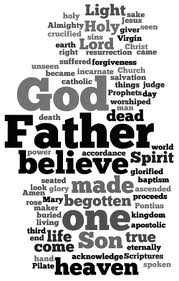
The Apostles’ Creed is a dynamic treasure. When we fail to use it, at least as a basic guide to essential teaching, there is a definite vacuum in our churches. We are generally left to choose the important truths that we want to major on. The result of this approach brings more disunity and doctrinal confusion, not less.

In church history we can clearly see that no human document has ever served a greater purpose in uniting Christians around a common faith than the Apostles’ Creed. It was confessed in one’s holy baptism, affirmed regularly by the whole gathered church and openly expressed essential Christianity for Christians everywhere.

The Apostles’ Creed has the pride of place in history as well as the clarity of true simplicity. There is plenty here to offend the sensibilities of almost all modern ideas and cultures, which makes it the perfect ancient-future faith way to establish fidelity and unity.

In the early church this creed provided a rather explicit response to three challenges.

The first challenge was to define the experience of Jesus within and […]

Does the Creed Really Matter?

By |2021-07-02T06:16:06-05:00November 6th, 2012|Categories: Creeds, The Church, Theology|

The outline of the Christian faith that we saw in Acts 2:14–36 (last week) provides a starting point for grasping the essential points of “the faith. We call this the kerygma, or the preached faith, of the earliest Christians. This is what they confessed and believed in order to be followers of “the Way,” or Christians. This underscores the importance of confessing the faith faithfully right down to the present day. As we’ve seen, we cannot talk about being faithful followers of Jesus without “the faith.”

What Matters Is Right Doctrine

Frequently people tell me that catholicity doesn’t matter. What matters, they argue, is right doctrine. They then argue that we get this right doctrine only by exegesis of the Bible alone. They insist that their church (or worse yet, they themselves) is right since they truly follow the Bible. Yet in many cases their church is less than two generations old. (This explains one reason why really important doctrines, like the Trinity, are not practically important in so many American churches and contemporary evangelical movements emerging in our time.) But all of this really begs an extremely […]

More on the Catholic Synod on Evangelization and the Future of ACT 3

By |2021-07-02T06:16:06-05:00November 5th, 2012|Categories: Evangelism, Missional-Ecumenism, Roman Catholicism|

The recent Catholic Synod of Bishops (October 7–28) dialogue on the new evangelization included a number of presentations by both Protestant guests and Catholic bishops. One of the more stirring and encouraging reports (most of these are short and can be quickly read in English at the Vatican site devoted to the synod) was given by the President of the Pontifical Council for the Promotion of New Evangelization, Salvatore Fisichella, the titular bishop of Voghenza:

The New Evangelization presents itself as a pastoral project which will engage the Church for the next generations. It is urgent that before “doing”, the foundation of our “being” Christian is rediscovered so that the NE is not experienced as an addition in a moment of crisis, but as a continuous mission of the Church. One must combine the need for unity, to go beyond fragmentation, with the richness of ecclesial and cultural traditions. Unity of a pastoral project, is not equated with uniformity of fulfillment; rather, it indicates the need for a common language and contributing symbols which make evident the journey of the whole Church more than […]

The Catholic Synod on Evangelization: New Signs of Global Missional-Ecumenism

By |2021-07-02T06:16:07-05:00November 2nd, 2012|Categories: Evangelism, Missional-Ecumenism, Roman Catholicism|

A much discussed Catholic Synod of Bishop, convened to address the issues and concerns of the new evangelization, took place in Rome between October 7–28. This synod was not, in and of itself, a hot item in the global news cycle. One reason is because few of the initiatives that will come from this dialogue will lead to political and social changes that most people care about. For me the exact opposite is the case.

John L. Allen, Jr., a keen observer of the Vatican, summarized this synod at the mid-way point (October 17) by writing the following on the National Catholic Reporter web site (October 19):

The Synod of Bishops on the new evangelization reached its halfway point Wednesday, with the “report after the discussion” by Cardinal Donald Wuerl of Washington, D.C., who’s serving as the relator, or general secretary. If nothing else, one has to give Wuerl credit for brevity — these reports are often sprawling, but he managed to summarize the discussion to date in a crisp 4,000 words.

The purpose of the relatio post disceptationem […]

Less Than One Week Until Our National Election

By |2021-07-02T06:16:07-05:00November 1st, 2012|Categories: America and Americanism, Politics|

Like most of you I am truly ready to move beyond the election season. November 6 cannot arrive too soon for my taste. As I have listened, watched and studied this particular election I would now like to reveal my decision.

1. I do plan to vote. Some months ago I was unsure about voting at all. I even expressed this to some friends. I am still not entirely enamored with the way our system works, at least at this point in our national history. I have read President George Washington’s warnings about the danger of two parties and see why he was concerned that we would devolve into such deep partisanship that our freedom and way of life could be lost. Blame both Republicans and Democrats if you will. Indeed, blame all the sides in this partisan context but in the end our present system fosters mistrust, even outright cynicism.

2. I have finally made up my mind. I will vote for the person who I think is best qualified to be a competent leader of the […]