A Modest Post-Denominational Proposal

By |2021-07-02T06:15:11-05:00September 30th, 2013|Categories: ACT 3, Culture, Current Affairs, Discipleship, Emergent Church, Faith, Gospel/Good News, Kingdom of God, Missional Church, Missional-Ecumenism, Personal, The Church, The Future|

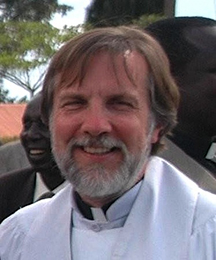
georgebioRev. George Byron Koch (Coke) is my friend. In fact, he is my very good friend. As my lead blog post for this week I am publishing a document that George recently sent to me to get my feedback. I now share it with you to get your feedback and to show you how two missional-ecumenists think about the church in these challenging and exciting times.

Fr. George Koch has been the pastor of Resurrection Church, West Chicago (IL), since June of 1994. George received a Bachelor of Arts degree in Physics in 1968 from Elmhurst College. While in college he was active in the Civil Rights Movement, wrote a newspaper column, hosted a series of local radio programs and led a band called “The Establishment.” After a time in the recording and film industry George founded a venture-funded national software company which led, in 1990, to him becoming senior vice-president for the Oracle Corporation. But George was restless for radical service to God through the mission of the church as a called and trained minister of the gospel. […]

Let the Great Games Begin

By |2021-07-02T06:15:11-05:00September 28th, 2013|Categories: Uncategorized|

13297083-mmmainToday the college football season takes a decided turn to some truly interesting games that take on a sense of urgency for those of us who truly love this game. LSU plays at Georgia, a truly nice matchup that could determine a lot in the SEC going forward. And Notre Dame hosts undefeated Oklahoma. Are the Sooners for real? I think so but we will know much better by late Saturday evening.

Then there is this SEC game in Tuscaloosa that I care about a great deal – Alabama hosts undefeated Ole Miss. I love what the Rebels have done under Hugh Freeze. I love the gritty confidence of this highly talented young team. I love that Alabama will be tested, or at least should be. I still believe the Crimson Tide wins but I am worried, just a bit. Which team shows up at 5:30 CDT on ESPN? Good Tide or mediocre Tide?

I love that each year a college team takes on a “new” identity. Players come and go and freshman then begin to play. At this […]

Mutuality and Kinship with Those on the Margins

By |2021-07-02T06:15:11-05:00September 27th, 2013|Categories: Current Affairs, Missional Church, Missional-Ecumenism, Poverty, The Church, The Future|

Father Gregory “Greg” Joseph Boyle (1954) is an American Jesuit priest. He is the founder and Director of Homeboy Industries and the former pastor of Dolores Mission Church. Boyle earned his BA in English from Gonzaga University, an MA in English from Loyola Marymount University, a Master of Divinity from the Weston School of Theology, and a Sacred Theology Masters degree from the Jesuit School of Theology.[3] Before founding Homeboy Industries, Father Greg taught at Loyola High School and worked with Christian Base Communities in Cochabamba, Bolivia. He was appointed as Pastor of Dolores Mission in the Boyle Heights neighborhood of Los Angeles in 1986 where he served through 1992. Following this, Fr. Greg spent time as Chaplain of the Islas Marias Penal Colony in Mexico and Folsom Prison, before returning to Los Angeles and Dolores Mission.

In this unique video Fr. Greg addresses what community and kinship really look like, especially with […]

Leaders Who Focus on People, Not Just Ideas

By |2021-07-02T06:15:12-05:00September 26th, 2013|Categories: Friendship, Leadership, The Christian Minister/Ministry, The Church|

henri_aboutHenri Nouwen (1932-1996) was a Dutch-born Catholic priest and writer who is best known as the author of 39 books about spirituality. Nouwen studied psychology and theology and has had a profoundly human way of making spirituality come alive for many people, including a large number of evangelical Protestants. He taught at Notre Dame, Yale Divinity School and then Harvard Divinity School. Yet he ended his life as a pastor within the L’Arche Community in Ontario, caring frequently for one disabled man. It is this last part of his story that appeals universally to many who discover him through his writings and story.

In 1990 Henri Nouwen was in Paris during January. As was so often the case he was struggling mightily. His writing was not going well and his mind, as he put it, “was in cramps.” He was frustrated and discouraged. (This was often his experience!) He decided to go to Lourdes in the “off-season” to give his “anxious heart a rest.” He stayed only three days but he kept a small journal, which was published […]

The Scapegoat Who Finally Removes All Our Sin – Part Two

By |2021-07-02T06:15:12-05:00September 25th, 2013|Categories: Biblical Theology, Christ/Christology, Death, Forgiveness, God's Character, Gospel/Good News, Jesus, The Church|

UnknownThe four Gospels describe in specific detail how Jesus died during the Passover Feast, not Yom Kippur. So how do we explain this (seeming) problem? I submit that the date on the Jewish calendar was Passover when he died but the events that transpired look exactly like the Old Testament Day of Atonement.

Let me explain. Jesus is arrested and brought to the high priest to be examined. The high priest accuses Jesus of blasphemy, placing what is said to be the guilt and sin of the Jews upon him when in reality all that these various leaders are doing is transferring their own guilt upon Jesus in a mock display of power and symbol. Jesus is then led away like a scapegoat to the place called “the skull.” It was a wilderness; a dump where criminals were taken to die. Here is what I see – the Gospels tell you that this is Passover, but the storyline says this is not just a Passover lamb but this (he) is a scapegoat. When Jesus breathes his last breath […]

The Scapegoat Who Finally Removes All Our Sin, Part One

By |2021-07-02T06:15:12-05:00September 24th, 2013|Categories: American Evangelicalism, Biblical Theology, Christ/Christology, Death, Forgiveness, God's Character, Gospel/Good News, The Church|

I hear numerous objections to what I’ve proposed about how to understand the atoning sacrifice of Jesus in his death. I know these objections quite well since I personally made most of them for decades. The only problem with these objections, at least to me, is that they can be answered quite clearly by a better, richer and fuller understanding of the Old Testament sacrificial system. If this understanding is correctly joined with the teaching given to us by the writer to the Hebrews, then we can make better sense of Jesus’ death and what happened at the cross.

I am referring to Hebrews chapter nine when I make this statement. (I will include the whole chapter here to create the context. I have also included some relevant translation notes in parentheses, notes which are particularly important to reading this chapter.)

Hebrews 9

Now even the first covenant had regulations for worship and an earthly sanctuary. For a tent (tent=tabernacle) was constructed, the first one, in which were the lampstand, the table, and the bread of the Presence; this is called the Holy Place. Behind […]

The Cruciform God

By |2021-07-02T06:15:12-05:00September 23rd, 2013|Categories: American Evangelicalism, Biblical Theology, Christ/Christology, God's Character, Gospel/Good News, Incarnation|

imagesWhen the concept of the atonement is primarily understood as divine forgiveness we have been given a clear way to understand how God can be both just and justifier. He can demand payment for an offense and yet at the same time he can provide forgiveness in himself as the person who pays for our offense. He can do both at the same time.

Be honest. No one enjoys suffering. In fact, if a person desires to suffer we seriously wonder if they are mentally healthy. But if the reason for our suffering is just and understandable, on other grounds that we might not readily see at first glance, then most of us can face it with some degree of strength. What makes suffering particularly hard to accept is this – if we are suffering because of an injustice done to us then it truly seems unbearable. The reason for this perplexity is that we rarely think of ourselves in a negative light. We believe that we do not deserve to suffer because we are not that guilty. […]

The Depth & Extent of God’s Forgiveness Displayed in the Atonement – Part 2

By |2021-07-02T06:15:12-05:00September 19th, 2013|Categories: American Evangelicalism, Biblical Theology, Christ/Christology, Church Tradition, Creeds, Forgiveness, God's Character, Gospel/Good News, Incarnation, Love|

UnknownOver the centuries theologians have developed numerous models for expressing the saving significance of Jesus’ death. We have sketched out several of these models, ever so simply I freely admit, in several blogs the past few weeks. I have concluded, along with Joel B. Green, Professor of New Testament at Fuller Theological Seminary, that: “No interpretation of the atonement can be regarded as the only authentic one, not least because no one model or metaphor can exhaust the significance of Jesus’ crucifixion” (Fuller Theology, News & Notes, Fall 2012, 3, italics are my own). I urge you, friends and readers, to grasp the importance of Green’s statement. You should realize that by opposing the simple clarity of this conclusion that you are likely opposing other important Christian truths, especially the unity of the one, holy, catholic and apostolic church.

Joel Green suggests that this was true even within the time in which the New Testament itself was written since several different models seem to clearly be at work in the apostolic texts. This was true as well in […]

The Depth and Extent of God’s Forgiveness is Displayed in the Atonement – Part 1

By |2021-07-02T06:15:12-05:00September 18th, 2013|Categories: American Evangelicalism, Biblical Theology, Christ/Christology, Forgiveness, God's Character, Gospel/Good News, Jesus, Love|

imagesYesterday I wrote about atonement as forgiveness. I showed that there truly is a substitionary aspect of the atonement that must be grasped. This is because our sins actually require the paytment of a debt, or what has been called a ransom price. These elements are all clearly present in the ancient faith, both in the Old Testament system and in the New Testament Gospels and epistles. Debates about “how” this debt was paid, or “to whom” it was paid, generally tend to get us off track. Let me take this point a bit further.

I earlier referenced Matthew 18 and the payment that comes about through the canceling of the debt, or through forgiveness. But this debt theme in Matthew 18 seems to refer to money. The point of the story is clearly meant to take us beyond a monetary debt. Consider the sin of adultery as just one poignant and powerful example, especially since this particular sin demonstrates the whole aspect of violating and breaking a God-ordained covenant.

A person trusts their marriage partner deeply but they […]

The Atonement and the Grace of Forgiveness

By |2021-07-02T06:15:12-05:00September 17th, 2013|Categories: American Evangelicalism, Biblical Theology, Church Tradition, Forgiveness, God's Character, Gospel/Good News, Love, The Church|

forgive_sunday_icon1If you follow the idea of atonement that I began to develop yesterday, namely that the atonement is ultimately about divine forgiveness, then you can readily see that a payment is truly made to atone (lit: to make us one again). This payment, says Jim Danaher, is one that “God makes to himself, which means that he suffers the loss” (Eyes That See, Ears That Hear, 99). Let this claim sink in for a moment before you read on. In fact, please read this entire paragraph several times.

When I first began to grasp this idea it seemed so completely right to me yet it was something that I had never heard before, at least heard so clearly stated. It answered a lot of questions, though I freely admit that it did not answer all of them. As I hope to show it has the power to give us a better, and more love-centered, explanation of what Jesus actually did in dying for us on the cross. He took our debt upon himself and then out of his […]