My Encounter with Street Evangelists – Entrenched Darkness or Emotional Ignorance?

By |2021-07-02T06:15:08-05:00November 1st, 2013|Categories: Evangelism, God's Character, Personal, Spiritual Warfare|

Unknown-3Engaging with darkness, or just entrenched spiritual and emotional ignorance, is not a hobby of mine. In fact I tend to avoid it wherever possible. I have dealt with evil spirits and even been used to remove a demonic spirit here and there. In saying this I am not boasting in the least. I am reminded that our Lord taught his disciples, who were also empowered by his Spirit to deal with demonic spirits, to: “Nevertheless, do not rejoice at this, that the spirits submit to you, but rejoice that your names are written in heaven” (Luke 10:20).

Last Saturday I was in Tuscaloosa enjoying a totally gorgeous fall day. I saw some friends, visited some Bama tailgaters and soaked in the ambiance of Alabama football before the kickoff at 2:30 p.m. Around 1:45 I decided it was time to walk down University Avenue to Bryant-Denny Stadium. A few hundred yards from the stadium, as throngs of people were moving along at a rather slow pace, I heard a street preacher just ahead of me on my left. […]

Can You Interpret the Signs of the Times?

By |2021-07-02T06:15:08-05:00October 30th, 2013|Categories: American Evangelicalism, Apologetics, Culture, Current Affairs, Missional Church, Social Networking, The Church, The Future|

25955Except for political debate, popular culture may elicit as many responses, both pro and con, as any current subject discussed by Christians. There is a range of views in our ranks about culture. This range goes from one end of a spectrum – an end which says, “stay away, stay entirely away” – to another – which says “enjoy it without serious thoughtful consideration.” I have previously admitted that I embraced one side of this debate in my early years and then the other side (or extreme) in my thirties. I now embrace a third view, one that is hopefully a bit more theologically reflective. (One must be careful here since you should know that you always tend to favor your present view as your more mature and correct view!)

So why do I think engaging with popular culture is so important? To ask this question another way I put it this way: “Why should I write blogs about movies, books, art and music?” Or, to put this even more precisely: “Why should I engage with news events […]

Leisure, Popular Culture and the Modern Moment

By |2021-07-02T06:15:08-05:00October 29th, 2013|Categories: American Evangelicalism, Biblical Theology, Culture, Current Affairs, Film, Games, Personal, Television, The Church|

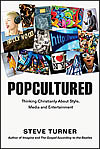
UnknownAny serious thinking about popular culture must take into account the amount of time we have to spend in the sphere of modern culture. Steve Turner rightly concludes: “It’s hard to argue that the Bible is a source of guidance when dealing with such areas of life as money, marriage, family, relationships, work, worship and prayer but has nothing useful to say when it comes to culture” (Popcultured, 19).

In reality what we now call popular culture is the result of the increase of leisure time we have in Western society. We can decry this all we want but it is reality for all but the extremely poor and in the West most poor people consume television, and music, to some degree, if not to large degrees as never before in human society. Great Britain’s Office for National Statistics reported in 2010 that Britons were spending nine times as much on recreation and culture as they had only forty years earlier in 1970. There has been a huge shift from material goods to experience, as another survey revealed. […]

Glorifying God in Our Cultural Pursuits

By |2021-07-02T06:15:09-05:00October 28th, 2013|Categories: American Evangelicalism, Biblical Theology, Culture, Film, Kingdom of God, Television, Theology|

3768Last week I asked a much-debated question raised by the patristic theologian Tertullian: “What has Athens to do with Jerusalem?” I observed that Tertullian was primarily concerned about what role philosophy had in dealing with the Christian faith. The same question, as I showed previously, can be applied to popular culture. What place does Hollywood, Silicon Valley and Madison Avenue have with Christ?

I am persuaded that far too few Christians have a serious view of culture, especially of popular culture. From TV shows to modern fiction we range from the extreme of “total separation” all the way to “uncritical acceptance.” Without a carefully developed theology of culture it seems to me that wide pendulum swings will inevitably characterize the Christian’s engagement with popular culture. Reconciling one’s faith with art, for example, has troubled more than a few Christians that I have known over the years. In my early Christian experience I personally ranged from general confusion, into a brief period of separation and then toward a wide-scale (uncritical) acceptance. Because I did not dig into the content […]

The Danger of Gossip

By |2021-07-02T06:15:09-05:00October 25th, 2013|Categories: Ethics, Forgiveness, God's Character, Love, Personal, Spirituality, Unity of the Church|

Mother-Antonia-Brenner-by-David-Maung-San-Diego-Red-300x146Which is worse, lying or gossiping? Have you ever bothered to ponder this question? I have asked it, more than once, but not thought about it deeply enough I confess. Seriously, think about this one for a moment.

Mother Antonia Brenner, a precious Christian who passed away last week in Mexico, makes a clear and compelling case that gossip is a far worse sin than lying in this three-and-a-half minute video. I happen to think she is right! Decide for yourself but do not miss this as I assure you she will make you think more carefully about your own tongue and personal holiness, rightly defined.

May God forgive me and help me to be truly holy and thus become a man who learns how to stop the gossip chain. I confess that I am asking what this means about my Facebook posts that I put on my wall which (can) stir up controversy. I welcome your personal witness and insights in this regard.

Mother Antonia says: “The tongue that gossips is where the devil washes his hands.” It seems […]

Silence is Often Golden – On Why I Should Not Use Social Media to Encourage Christian Disunity

By |2021-07-02T06:15:09-05:00October 24th, 2013|Categories: American Evangelicalism, Apologetics, Biblical Theology, Current Affairs, Jesus, Love, Personal, The Church|

UnknownIn the light of various posts last week regarding the “Strange Fire” conference hosted by John MacArthur, and the response to it by Mark Driscoll who stood outside the event giving away copies of his book to people attending the conference, I posted several blogs (written by others) regarding these events on my own Facebook page. I did so with a minimum of personal comment. I confess that I am conflicted about posting these kinds of items, much less passing along my comments on them. Why?

First, I am reminded to consider what the Apostle Paul says about love. When I do this I am always forced to hit “pause” and slow down. Here are his memorable words (1 Corinthians 13:4–7) in case you’ve forgotten:

Love is patient; love is kind; love is not envious or boastful or arrogant or rude. It does not insist on its own way; it is not irritable or resentful; it does not rejoice in wrongdoing, but rejoices in the truth. It bears all things, believes all things, hopes all things, endures all things (NRSV).

Years […]

“What Has Athens to Do with Jerusalem?” – An Old Question for Modern Christians

By |2021-07-02T06:15:09-05:00October 21st, 2013|Categories: Culture, Discipleship, Film, Philosophy, Spirituality|

UnknownEvangelical Christianity teaches people how to share the basics of simple faith and Christian living fairly well. It shows people how to read their Bible, how to pray and especially how to share the “simple” gospel with others. Now we even have a growing interest in spiritual formation, including teaching on contemplation and meditation. All of this is our strength. But we do have more than a few weaknesses as well. If ecumenism has taught me anything it has helped me learn how to listen to other Christian traditions and learn from my brothers and sisters.

One of the more intriguing questions that raises difficult questions for all Christians, especially evangelical Christians, is this: “How we can be faithfully Christian while we participate in popular American culture?” This question is actually not new. In the third century the church father Tertullian famously asked, “What has Athens to do with Jerusalem?” What he meant by this was what has biblical faith to do with secular learning, or to be more precise, “What has the gospel to do with philosophy?”

Steve […]

How Long Does It Take to Form a New Habit?

By |2021-07-02T06:15:09-05:00October 18th, 2013|Categories: Personal|

Unknown-1You have probably heard that it takes three weeks for a new habit to form. I have even heard fifty days from some teachers. Both sound neat and simple but the data simply does not support this idea. The European Journal of Social Psychology (2010) published an article on habit changes that suggested what seems to be a far more reasonable understanding of habit change. It found that participants took anywhere from 18 to 254 days to make a behavior automatic.

By using the tools and support system of Weight Watchers for a little over a year I can tell you that it has taken every bit of twelve-plus months for me to build new habits that “feel” more automatic, or routine. (I realize that these habits are not automatic because various factors could trigger a response that would break my “new” habits quickly!)

True weight loss is a lifestyle, not a diet. If I have learned anything from this process it is that educated and sound choices become a habit once you practice what you know long enough […]

Gravity – A Film of Special Effects and a Few Powerful Moments

By |2021-07-02T06:15:10-05:00October 17th, 2013|Categories: Culture, Evangelism, Faith, Film|

There can be no serious dispute that movies occupy a significant role in popular American culture. More than any other art form films supply cultural references that become a part of our everyday life and vocabulary. I am sometimes asked, “Why do you blog about films and television?” The answer is really simple – there is no more meaningful entryway into the lives of many people than through the door opened by extremely popular movies. It is a natural point of contact and seems to fit with Paul’s use of culture to appeal to people who lived in the world of his time. (I watch films for many other reasons but I will say more about this in another post.)

gravity-movie-poster-closeupFilms are the way many people explain their emotions, their personal narrative or even their belief system. I recently read that in 2001 a census taken in England and Wales found almost 400,000 people who registered their religious faith as “Jedi.” This is, as many of you know, a reference to Star Wars, one of the great movie […]

Do You Want to Understand Others?

By |2021-07-02T06:15:10-05:00October 16th, 2013|Categories: Biblical Theology, Books, Current Affairs, Education, Faith|

UnknownResearch released last week suggests that if you want to better equip people to understand others, and help their mental well-being, you should encourage them to put down their popular, commercial fiction and read more classic literary fiction.

In a series of experiments, participants read a short passage, and then completed several tasks, including one in which they were encouraged to identify people’s facial expressions in photos. (I confess this type of social psychology and study deeply fascinates me.) Analysts said that when people read the less commercial fiction the response in their performance temporarily improved. (This research, according to an October 4 USA Today story, was done by David Comer Kidd and Emanuele Castano of the New York School for Social Research in New York.) Kidd says, “The effect was the same (even for not particularly well-read subjects) . . . if they pick up a work of literary fiction and read it, they will be more sensitive to other people’s subjective states.” But why is this true?

Castano says that he believes this is true because literary […]