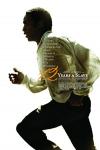
Three Films on Race and Racism That Will Help Us as Christians

By |2021-07-02T06:15:04-05:00November 18th, 2013|Categories: America and Americanism, Civil Rights, Culture, Current Affairs, Film, Race and Racism, The Church, The Future|

Seeing popular movies will never change your heart at the deepest level. Yet movies are a powerful art form that can reach into your human heart and this power can deeply impact us, both personally and corporately. I believe 12 Years a Slave does this as well as any movie about race that I have ever seen. Indeed, it is the only full-length feature film to present slavery from the perspective of the slave. Think about that statement for at least a moment. Amistad was a magnificent movie but it was actually about the social and political struggle for abolition in America. So was Amazing Grace, but it too was about abolition in Great Britain. Both of these superb movies deeply move the heart. Roots was the closest thing that we’ve ever had to 12 Years a Slave but Roots was a fictional television series. 12 Years a Slave is based on a true story and moves the viewer profoundly if you will allow it to touch you.

In the light of the power of this amazing story, and because of the artistic medium of modern film, […]

What Has Trayvon Martin to Do With Faith, Grace and Freedom?

By |2021-07-02T06:15:04-05:00November 14th, 2013|Categories: America and Americanism, Civil Rights, Current Affairs, Race and Racism, The Church|

Unknown-1The Trayvon Martin case, hotly debated several months ago and now off the front page, offers a unique opportunity for Americans in general. It offers an even more important opportunity for Christians in particular. Can we deeply ponder where we are in terms of race and racism in our nation? I do not know but I am resolved to be a peacemaker and to try harder than ever.

As I have stated in a number of other contexts I am a minister in the Reformed Church in America. Just two years ago my church adopted a fourth confessional standard, along with the three historic standards of unity created by the Reformed side of the Protestant Reformation (i.e., the Heidelberg Catechism, the Belgic Confession and the Canons of the Synod of Dort). This forth statement originated among Reformed Christians in South Africa. Our church body, in adopting this new standard known as the Belhar Confession,  became the first American church to formally adopt it.

The Belhar Confession has its roots in the struggle against apartheid in Southern Africa. This “outcry […]

A Great Film and the Nagging Question of Race in America

By |2021-07-02T06:15:04-05:00November 13th, 2013|Categories: Uncategorized|

Unknown-1President Abraham Lincoln believed that he was acting in the humane religious tradition of the Declaration of Independence and the Bill of Rights when he spoke in March of 1865. “This was their majestic interpretation of the economy of the Universe,” he said of the Founders’ view of what Hamilton had called mankind’s “sacred rights.” “This was their lofty, and wise, and noble understanding of the justice of the Creator to His creatures,” Lincoln said. “Yes, gentlemen, to all His creatures, to the whole great family of man. In their enlightened belief, nothing stamped with the Divine image and likeness was sent into the world to be trodden on, and degraded, and imbruted by its fellows.”

Lincoln concluded this short second inaugural address with one of the most memorable lines about race ever spoken in our entire history:

Fondly do we hope, fervently do we pray, that this mighty scourge of war may speedily pass away. Yet, if God wills that it continue until all the wealth piled by the bondsman’s two hundred and fifty years of […]

Was Lincoln Right About God’s Providence and the Great Sin of Slavery?

By |2021-07-02T06:15:04-05:00November 12th, 2013|Categories: America and Americanism, Civil Rights, Current Affairs, Race and Racism|

American slavery was evil, completely and totally evil. It was a form of human condemnation to a frequently violent life and an even more tragic death. There is nothing benign or acceptable about the institution or its practice. What we as a nation did in defending and protecting this evil is hard to fathom living in the legal freedom of the twenty-first century. We legally deprived millions of Americans of life, liberty and any meaningful pursuit of human happiness. This is just fact!

Unknown-3Today many talk about the Constitution with a reverential respect that borders on the sacred. I celebrate our Constitutional republic. I truly do. It is a blessing in numerous ways. But I cannot shake this sad, agonizing sense that so few of us understand the deep stain that slavery gave to our collective character. Had all of this collective evil ended in 1865 it would be a memory that would still haunt us. But slavery was followed by a century of legal segregation, “separate but equal.” (What a complete misnomer if there ever was one!) […]

12 Years a Slave – A Film That Reaches Into the Heart

By |2021-07-02T06:15:04-05:00November 11th, 2013|Categories: Civil Rights, Culture, Current Affairs, Film, Personal, Race and Racism|

tbn_f6dd3fb22c34f02cSteve McQueen’s stunning visual portrayal of the story of Solomon Northup, a black musician living in Saratoga Springs, NewYork, with his wife and two young adoring children in 1841, is nothing if it is not one of the most moving films I’ve seen in many years. 12 Years a Slave is art but it is art at its highest and noblest best, thus it is more than a film with a great story, or great action and stunning visuals. (All of which it has.) It is a film about America in the middle of the eighteenth century that causes the problem of slavery to come alive for modern viewers. There should be no mistake about the perspective the film adopts since it makes the American experience come alive in a way that far too few of us have understood at a deeply emotional level.

Richard Cohen, a syndicated Washington Post writer, wrote a particularly moving editorial on this film a few weeks ago, in which he said, “[The film reveals what] we obscured, we covered up – we […]

Shameless: A Priest Preaching the Gospel of Jesus Faithfully

By |2021-07-02T06:15:05-05:00November 8th, 2013|Categories: ACT 3, American Evangelicalism, Homiletics/Preaching, Missional-Ecumenism, Roman Catholicism|

Several years ago Father John Riccardo, a priest from Plymouth, Michigan, preached a sermon in the pulpit of the Kensington Community Church (MI), titled: “Shameless.” A better sermon on the gospel could not be found, at least in my judgment. For those conservative Protestants who insist that a Catholic priest cannot, or does not, preach the gospel here is a living, breathing example that you are wrong. Fr. Riccardo says that we should know Jesus, not just know about Jesus. Knowing Jesus is much more than knowing facts, truths or propositions. It is not about saying the words of the creed or  about going forward at the end of an appeal. It is not even about saying the words of the sinner’s prayer. It is about knowing Him. This is about 35 minutes long but in your leisure be sure to watch it


“As Darwin Is My Witness”

By |2021-07-02T06:15:05-05:00November 7th, 2013|Categories: Culture, History, Missional Church|

Unknown-1The title of my blog today was given to me by a new friend, Paul Miller, who lives in the Seattle area. Paul recently came to spend a day with me in Chicago. We talked about a wide-range of issues, particularly relating to missions, culture and the power of the gospel. We talked briefly about the failure of Prohibition in America. We both expressed reservations about imposing our evaluations of this failed experiment upon other nations. Paul made particular reference to the strictness with which the early 19th Puritan missionaries pushed temperance on Hawaii’s natives. Paul and I both observed that given the scourge liquor has often been on nations that received it from the West the missionaries just might have been right to teach temperance and take such a firm stand against Western lands that were importing alcoholic beverage into other cultures.

Paul said:

Here I call Charles Darwin to the witness box! While not a great fan of his biological theories, I find myself warming instantly to his cultural anthropology . . . and toward his open […]

Sixteenth Street Baptist Church in Birmingham, Alabama – The Legacy Lives (3)

By |2021-07-02T06:15:05-05:00November 7th, 2013|Categories: America and Americanism, Church History, Civil Rights, Freedom, Gospel/Good News, Leadership, Missional Church, Personal, Race and Racism, The Church, The Future|

Unknown-1Birmingham pastor Fred Shuttlesworth (1922–2011) was known as a fiery preacher in the 1950s when he served the Bethel Baptist Church in Birmingham as a young minister. Born in Mount Meigs, Alabama, Shuttlesworth was licensed and ordained as a preacher in 1948. He earned an A.B. (1951) from Selma University and his B.S. (1953) from Alabama State College. Shuttlesworth served as minister at First Baptist Church in Selma until 1952, and the following year was called to lead Bethel Baptist Church in Birmingham. Shuttlesworth tested the issues of segregation as a young pastor, eventually becoming emboldened in his intense struggle for the rights of all black Americans. Shuttlesworth, now an icon in Birmingham where the airport has been named in his honor, became a major civil rights activist at the time of the Freedom Rides. He also co-founded the SCLC. It was in this role that he welcomed two bleeding and battered Freedom Riders into his home in Birmingham at a turning point in the history of the city. (He left Birmingham for Cincinnati in 1961 to […]

Sixteenth Street Baptist Church in Birmingham, Alabama – The Legacy Lives (2)

By |2021-07-02T06:15:08-05:00November 5th, 2013|Categories: American Evangelicalism, Church Tradition, Civil Rights, Missional Church, Personal, Race and Racism, The Christian Minister/Ministry, The Church|

Unknown-2The Sixteenth Street Baptist Church calls itself: “A Bible-Centric Ministry.” The Sunday bulletin proclaims, just under the name of the church, that this is a place “Where Jesus Christ Is the Main Attraction.” Inside the bulletin there is a vision statement, a mission statement and a statement of the church’s philosophy of ministry. Rarely have I read anything so biblically clear, and deeply moving, at least for its sheer simplicity.

Vision Statement

Our vision is to have a Bible-centric ministry that will reach, rebuild and reproduce, disciples through the power of the Holy Spirit.

Mission Statement

Our mission is to introduce people to Jesus Christ and to encourage the cultivation of a personal relationship with Him. We are, therefore, committed to evangelizing the sinner, exalting the Savior, and equipping the saints.

Philosophy of Ministry

In order to accomplish our mission we faithfully pursue seven basic philosophies in our ministries:

1. EXALT the Savior in dynamic worship.

2. EVANGELIZE the unbeliever through outreach.

3. ESTABLISH the new believer in the basic doctrines of the faith.

4. ENCOURAGE every believer to cultivate an intimate, personal relationship with Jesus […]

Sixteenth Street Baptist Church in Birmingham, Alabama – The Legacy Lives (1)

By |2021-07-02T06:15:08-05:00November 4th, 2013|Categories: America and Americanism, American Evangelicalism, Civil Rights, Gospel/Good News, History, Personal, Race and Racism, The Church|

pic--facade-370x250-72ppiOrganized in 1873, the Sixteenth Street Baptist Church was the first black church in Birmingham, Alabama. Initially, the congregation worshiped in a small building but in 1880 the church’s meeting place moved to its present location at 16th Street and 6th Avenue North in downtown Birmingham.  A modern brick building was erected in 1884 that established the church’s presence in the city.

Over time the City of Birmingham ordered the congregation to tear down its building. The church commissioned the state’s only black architect to design a new building.  A new church was completed in 1911 at a cost of $26,000.

Because of segregation Sixteenth Street Baptist Church, and other black churches in Birmingham, served many purposes. This facility functioned as a meeting place, a social center and a lecture hall for a variety of activities important to the lives of black citizens.  W.E.B. DuBois, Mary McLeod Bethune, Paul Robeson, and Ralph Bunche were among the  noted black Americans who spoke at the church building during its early years.  African-Americans from across the city, as well as neighboring towns, came […]