A Pentecostal Ecumenist Reflects on the New Pope and His Installation (2)

By |2021-07-02T06:15:48-05:00March 28th, 2013|Categories: America and Americanism, Church History, Church Tradition, Current Affairs, Evangelism, Missional-Ecumenism, Roman Catholicism, The Church, The Future, Uncategorized, Unity of the Church|

Papal Audience with Ecumenical and Interreligious Representatives

March 20, 2013

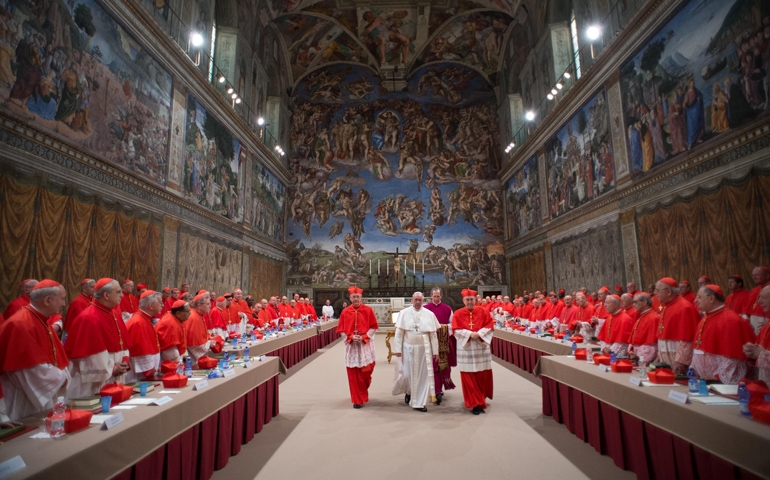
Last evening, we were informed that Pope Francis I needed to postpone our audience with him by one hour.  Thus, following a leisurely breakfast at our hotel, which we shared with General Linda Bond, about 25 people boarded the special bus to take us to the Apostolic Palace in Vatican City.  At 10:45 AM, we were escorted by the Carbonieri, with lights flashing and sirens wailing.  Fortunately, it was no longer rush hour and our trip was a quick one.  While the sky was clear when we rose, by the time we left for the Apostolic Palace, it was raining, and it rained steadily for most of the day.

Upon our arrival at the Vatican, we were driven through the Vatican gate next to the Doma Santa Marta as we were yesterday, and then we were driven around the back of St. Peter’s Basilica to the far side near the Vatican gardens, entering through two more gates and into a plaza or square around which the Apostolic Palace is built.  For several years, St. Peter’s Basilica has been under […]
A Pentecostal Ecumenist Reflects on the New Pope and His Installation (1)

By |2021-07-02T06:15:48-05:00March 27th, 2013|Categories: American Evangelicalism, Church History, Church Tradition, Current Affairs, Evangelism, Missional-Ecumenism, Roman Catholicism, The Church, The Future, Unity of the Church|

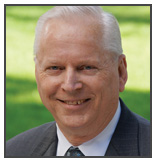
My Friend Mel Robeck: Pentecostal Ecumenist

Dr. Cecil M. (Mel) Robeck, Jr. is professor of church history and ecumenics and the director of the David J. DuPlessis Center for Christian Spirituality at Fuller Theological Seminary in Pasadena. His recent publications in the field of ecumenics have focused on the Holy Spirit, the Church, unity in the Pentecostal perspective, and potential contributions the Pentecostal Movement can make to the worldwide Christian Movement.

robeckMel Robeck is an ordained minister with the Assemblies of God and has also worked on ecumenical issues for nearly 30 years with the World Council of Churches, the Vatican, the World Alliance [now Communion] of Reformed Churches, and other groups. He serves as a Consultant to the Chairman of the Lausanne Committee for World Evangelization for long-term relations with the Vatican.  For the past 13 years Robeck has served on the steering committee of the Global Christian Forum.  He also participated with Pope John Paul II in worship events in Rome and Assisi.  For 18 years he has met annually with the Secretaries of Christian World Communions […]

Back to Lausanne

By |2021-07-02T06:15:48-05:00March 25th, 2013|Categories: American Evangelicalism, Church History, Culture, Current Affairs, Gospel/Good News, Missional-Ecumenism, Protestantism, Roman Catholicism, The Church, The Future, Unity of the Church|

Evangelicals will always have a mixed reaction to anything papal. After all, we do not accept the Catholic claims regarding the Petrine office as adequately and properly rooted in biblical authority. But we can respect the man, even love him as many of us did the last two popes, and still not believe that the office itself is rooted in either Scripture or the earliest history of the Christian church. Yet evangelicals are gospel driven people. (The very word “evangelical” is a reference to the evangel, or the good news of Christ.) We deeply desire to see people come to know and love Christ regardless of how they understand the priesthood, the papacy or the precise nature of the church. In this sense I suppose evangelicals are Christ-centered pragmatists. (I do not say this negatively in the least.) This doesn’t mean that we are not interested in ecclesiology, though at times it  seems that way. We are just not convinced of Catholic claims about a successor to Peter and the way this successor is chosen by the church of Rome.

I was recently asked by several friends, […]

Who Is Pope Francis, Really?

By |2021-07-02T06:15:49-05:00March 25th, 2013|Categories: Church History, Church Tradition, Culture, Current Affairs, Missional-Ecumenism, Roman Catholicism, The Church, The Future, Unity of the Church|

images

Yesterday marked the beginning of Holy Week in the Western Church. I am well aware of the importance of each day in this week for Christians who follow the liturgical calendar. Many of you, like me, follow the liturgical calendar in both your private devotional life as well as your corporate church life. I personally share in Holy Week remembrances in my own Protestant community where I have come to deeply appreciate the ebb and flow of the liturgy. This special week is the greatest of all liturgical weeks for Christian believers who deeply treasure the greatest mysteries of our faith. Thus, with deep respect for the whole church, especially in a week that brings us together in profound unity as we remember our Lord’s sacrifice for our common salvation, I would like to complete the series that I began last week on the election of Cardinal Jorge Bergoglio as pope. We now know him as Pope Francis, the pontiff of the Catholic Church.

I want to remind you, if you are new to my vision of mission […]

Habemus Papam Franciscum (5) – Why the Name Francis?

By |2021-07-02T06:15:49-05:00March 22nd, 2013|Categories: Church History, Church Tradition, Current Affairs, Missional-Ecumenism, Roman Catholicism, The Church, The Future, Unity of the Church|

What About the Junta Years? “The Dirty War”

One subject of controversy that has begun to surround the new pope is his role under the Argentine military dictatorship of 1976-1983. when he led the country’s Jesuits. According to the BBC’s Vladimir Hernandez he was accused of effectively delivering two fellow priests into the hands of the military authorities in 1976 by declining to endorse publicly their social work in the slums of Buenos Aires, which infuriated the junta at the time.

Another accusation leveled against him from the “Dirty War” era is that he failed to follow up a request to help find the baby of a woman kidnapped when five months’ pregnant and killed in 1977. It is believed the baby was illegally adopted.

Adolfo Perez Esquivel, a human rights activist at the time of the “Dirty War” was jailed and tortured by the regime. Esquivel told BBC News: “There were some bishops who were in collusion with the military, but Bergoglio is not one of them.” One would hope such credible witnesses will be enough to quell this kind of personal attack on the character of Francis.

Vatican […]

The Crystal Clear Ecumenical Vision of Pope Francis

By |2021-07-02T06:15:49-05:00March 21st, 2013|Categories: Missional-Ecumenism, Roman Catholicism, Unity of the Church|

Today’s blog is a translation of an address given on Wednesday, March 20, by Pope Francis. He received the fraternal delegates of churches, ecclesial communities and international ecumenical bodies, representatives of the Jewish people and of non-Christian religions, all gathered in Rome for the celebration of the official start of his ministry as Bishop of Rome. Do not stumble over the words spoken to non-Christians. Each paragraph has a particular context that some hyper-conservative Catholics and evangelicals will miss if they read this too hastily. Note also the reference to the Pontifical Council for Promoting Christian Unity. This is the same office that I met with in March, 2011. In recent years this council has been marginalized, at least to some extent, so the clear mention of its importance at such a gathering gives me immense joy.

I do not think I have ever posted a blog based upon a sermon or address reprinted in its entirety but this is too historic an address to pass considering my vocation and call to the vision that is so plainly represented in this message. Please, as I’ve already written, […]

Habemus Papam Franciscum: What Has Lausanne to Do with the Pope? (4)

By |2021-07-02T06:15:49-05:00March 21st, 2013|Categories: American Evangelicalism, Church History, Church Tradition, Culture, Current Affairs, Evangelism, Friendship, Missional-Ecumenism, Personal, Roman Catholicism, The Church, The Future, Unity of the Church|

The Lausanne Movement

Evangelicals in general, and evangelical leaders in particular, know far too little about the Lausanne Movement. This movement for global evangelization begin in the 1960s through the vision of Dr. Billy Graham. As Graham began to preach internationally, he developed a passion to “unite all evangelicals in the common task of the total evangelization of the world.”

In 1966 the Billy Graham Evangelistic Association, in partnership with America’s Christianity Today magazine, sponsored the World Congress on Evangelism in Berlin. I still possess and use the two large blue-bound books that contain the papers and counsel from this congress. This gathering drew 1,200 delegates from over 100 countries, and inspired further conferences in Singapore (1968), Minneapolis and Bogotá (1969), and Australia (1971). Shortly afterwards, Billy Graham perceived the need for a larger, more diverse congress to re-frame Christian mission in a world of social, political, economic, and religious upheaval. The Church, he believed, had to apply the gospel to the contemporary world. To do this would require work to understand the ideas and values behind rapid changes in society. He shared his thinking with 100 Christian […]

Habemus Papam Franciscum: "We Have a Pope" (3)

By |2021-07-02T06:15:49-05:00March 19th, 2013|Categories: American Evangelicalism, Church History, Church Tradition, Culture, Current Affairs, Evangelism, Kingdom of God, Missional-Ecumenism, Personal, Roman Catholicism, The Church, The Future, Unity of the Church|

My Prayers for the Selection of the New Pope

What does all of this news about the new pope mean for non-Catholics? And what, especially, does this mean for evangelicals like me who long to see the whole church pursuing Christ’s mission in greater unity and relational oneness?

I prayed for several things as the conclave chose a new pope:

  1. That he would be a man who loves Jesus Christ above all else and that this personal love would be self-evident for all to see.
  2. That he would be a man with proven humility and a deeply developed unity and commitment with, and to, the poor.
  3. That he would be a man who is courageously committed to reform inside the Curia who could lead the moral reform needed in the face of the numerous sex-scandals and the actions of bishops who compounded the problem while the world stood in horror rightly judging the church for her failures.
  4. That he would be a man with a deep commitment to pursuing ecumenical goals, those laid out at Vatican II and developed in relationships between many of us, formally and informally, since the 1960s.
  5. That he […]

Habemus Papam Franciscum: "We Have a Pope" (2)

By |2021-07-02T06:15:49-05:00March 19th, 2013|Categories: American Evangelicalism, Church History, Church Tradition, Culture, Current Affairs, Kingdom of God, Missional-Ecumenism, Personal, Roman Catholicism, The Church, The Future, Unity of the Church|

images-2The First Jesuit Pope

Some have noted that Pope Francis is the first Jesuit pope but few understand what this actually means.

Who are the Jesuits?

  1. The Society of Jesus is a male order of the Catholic Church, with 19,000 members worldwide.
  2. The society was birthed through the work and mission of Ignatius Loyola. images
  3. The order was established in sixteenth century Europe as a missionary order and Jesuits promise to keep vows of poverty, chastity and obedience.
  4. The order became so powerful by the eighteenth century that it was suppressed at the end of the century but then later restored.
  5. The Jesuits are often highly educated and have a reputation as expert communicators, which is why many Jesuits in America are college professors, teachers, writers and journalists.

Modern, especially American, Jesuits are often on the more “progressive” side of Catholic debates about theological and moral reforms. Pope Francis has clearly been a more conservative Jesuit. Under Pope John Paul II Jesuits lost some of their influence as the pope encouraged the rising star of Opus Dei, […]

Habemus Papam Franciscum: "We Have a Pope" (1)

By |2021-07-02T06:15:50-05:00March 18th, 2013|Categories: American Evangelicalism, Church History, Church Tradition, Current Affairs, Kingdom of God, Missional-Ecumenism, Personal, Roman Catholicism, The Church, The Future, Unity of the Church|

FrancisSistineIntroduction

Some moments in history seem very significant while we are passing through them. Time will really tell. 9/11 was such a moment for Americans. We who were alive that day will never forget. Last week, at least to me, felt like such a moment, but in a much less shocking and jarring way. I believe significant history was made in Rome by the choice of a new pope who took the name Francis.

Critics will have their day. History will tell the real story, at least long after we are all gone. Such critics have already surfaced from the left and the right. These critics are Catholics, and of course, some are Protestants. (One evangelical critic appears to be theologian Roger Olson who asked “Who Cares” if we have a pope? I posted a response on his site over the weekend if you’d like to see my comment.) The largest majority of these critics have been secularists who do not like much anything that reminds them of the Christian church in the modern world.

I write […]