How My Life Journey Took an Unexpected Turn

By |2021-07-02T06:14:19-05:00July 29th, 2014|Categories: Biblical Theology, Love, Missional-Ecumenism, Personal, The Church, Unity of the Church|

It was May of 1992, my last Sunday as the pastor of a congregation I had served for sixteen years. I loved the pastoral ministry, at least on most days. But I had undergone a unique call to embark upon a mission of renewal to the church-at-large. So at forty-three years of age I was saying “good bye” to my people. I struggled for the right words in my final sermon. I knew the emotions on this day would be particularly powerful. I was quite unsure what to preach. I decided to finish chapter seventeen in the Gospel of John (17:20-26). I had been preaching through John’s Gospel for nearly three years! (What can I say, I had learned a method of verse-by-verse expository preaching and had not yet realized the problems with preaching such a long series of sermons!)

What I did not know that day, as I recounted in the early part of my book Your Church Is Too Small (Zondervan, 2010), was just how much this final sermon would change my life. I seriously doubt that anyone else was impacted by this […]

Immersed in Divine Love

By |2021-07-02T06:14:19-05:00July 24th, 2014|Categories: Biblical Theology, Christ/Christology, God's Character, Love, Personal, Scripture|

imagesAfter years of struggle with the truth of divine love I now have an overwhelming sense of God’s great love and mercy toward me. I have come to experience this love through Jesus Christ. He reveals the eternal God to me in trinity; e.g. in the Father, the Son and the Holy Spirit. I will later seek to show why the trinity, a most under appreciated and misunderstood understanding of God, is so important to what we believe and how we live in loving, faithful obedience to God. If we are to be immersed in the love of God, and then love him and others with divine love, then we must grapple afresh with this great truth of God’s being, the truth that towers above all other divine truths – “God is love.”

When I am asked to speak about God, or to pray to God, I begin with these words:

Beloved, let us love one another, because love is from God; everyone who loves is born of God and knows God. Whoever does not love does […]

The Sudden Passing of Ecumenist Tony Palmer

By |2021-07-02T06:14:19-05:00July 23rd, 2014|Categories: ACT 3, Missional-Ecumenism, Personal, Protestantism, Roman Catholicism, The Church, The Future, Unity of the Church|

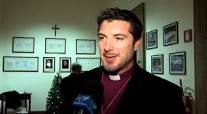
UnknownMany of you know by now of the sudden death of Bishop Tony Palmer last Sunday (July 20). This news was stunning to so many of us who knew a little about this wonderful, Spirit-filled, man. I had just begun to develop a friendship for Christian unity with Tony. Though we never met in person we had “discovered” one another and he recently received a copy of my book, Your Church Is Too Small (Zondervan, 2010). We exchanged several different messages and planned on meeting as soon as possible. We shared mutual friendships. I believed God had raised this man up very specifically to build a bridge of unity between evangelicals, charismatics and Catholics through deep friendship with Pope Francis.

I personally chair the Lausanne Catholic-Evangelical Conversation. (Our next private meeting is September 11-13 @ Mundelein Seminary. A public meeting will be held on the evening of September 11 and information is available on our website.) This leadership role in particular led me to reach out to Tony with great personal interest to understand what the Lord was […]

Our Love Is Too Small – An Update and a Plan

By |2021-07-02T06:14:19-05:00July 22nd, 2014|Categories: ACT 3, Biblical Theology, God's Character, Love, Personal|

Today I posted an email to over 1,800 readers of my ACT3 Weekly, a regular Monday letter. I would love to have many more of you receive this regular email. You can sign up at www.act3network.com. This allows you to pray for me and to read new material that is not normally posted here on the blog site.

Here is today’s letter in full.

Dear ACT3 Friends–

DSC_0725-300x199I am going to take a break from the Holy Spirit & mission series I’ve been doing for several weeks. (I will return to these articles next week and complete two more; July 28 and August 4). This Monday I want to provide an important update for all of you who are my praying friends and faithful donors.

Most of you know that for nearly six months I have been writing a book tentatively titled: Our Love Is Too Small.

I have never undertaken a writing assignment that has been so difficult. Yet this has been some of the most personally rewarding work I’ve ever done. I began writing […]

The Shameful Story of Judah

By |2021-07-02T06:14:19-05:00July 21st, 2014|Categories: ACT 3, Biblical Theology, Hermeneutics, Sexuality|

UnknownOn Saturday, July 12, I preached the evening vespers service at Lutheran Church of the Master in Carol Stream. My given text was Genesis 38. I think I would never have picked such a story had it not been assigned to me in advance. You can hear my twenty-minute sermon below.

https://soundcloud.com/act3network/the-shameful-story-of-judah

As I grow older I enjoy narrative preaching more than ever. This chapter in Genesis is so obviously narrative, with a clear dose of midrash going on, that it begs for the human imagination to work overtime putting various things together. It also begs another pressing question: “How or why do such lewd and bodacious stories get included in the biblical Canon?” Maybe our views of such things are far too prudish. If some Christians I know oversaw the arrangement of the Canon they would have left a great deal out I feel sure. This story would likely be at the top of their list. In very clear and offensive ways it is perverse to the extreme. I know of nothing else to say about that but it really does beg a […]

A Sabbath From Social Media and the Cell Phone

By |2021-07-02T06:14:20-05:00July 18th, 2014|Categories: Culture, Current Affairs, Personal, Social Networking|

Blade Barringer develops and maintains our ACT3 website as well as my blog site. He is a consummate professional. I recommend his services to any of you who need help in these areas of your ministry. His work is incredibly good and his prices are fair. His day job is with a Christian publisher but he handles some side jobs like his work for ACT3 Network. If you’d like to contact him let me know and I’ll pass along how you can reach him.

Unknown-3One of the things Blade has given to me is “freedom” in my spirit about how to use the various media tools that I employ. I am so clueless about this stuff but in Blade I have a friend who is patient, slow to speak, gentle and a great teacher. He will interact with me and yet never overwhelms me with big data in the process. I may sound “dumb” to him at times (I never ask) but he never makes me feel “dumb.” My world is so much better since Blade began to […]

Westminster Theological Seminary – Can Institutions Respond to Controversy in Radical Love? (Seven)

By |2021-07-02T06:14:20-05:00July 16th, 2014|Categories: American Evangelicalism, Current Affairs, Education, Love, Personal, Reformed Christianity, The Church, The Future|

Unknown-2In this, my final post about the culture and conflict at Westminster Theological Seminary (if you do not know what this is about then see my posts from last week) I offer some more thoughts about how a “spirituality of love” could transform the institution inside and out. I offer these points very sincerely and in hopes that some will hear me and act in faith to seek a better WTS.

  1. Amy Uelmen, in her aforementioned book, Positive Political Dialogue, says that the fourth step to a “spirituality of love” in political contexts is to “recognize suffering as a springboard to love.” The suffering that has transpired at Westminster Seminary is immense. I do not know the future of the school but I have to guess that this new controversy is not the end. Some may celebrate that they have “cleaned house.” I hope this is not the case. Will more bodies fall and more faculty leave, some for very different reasons than the Christotelic debates about hermeneutics? Amy Uelmen asks, working out of a “spirituality of love,” the following: […]

Westminster Theological Seminary – Can Institutions Respond to Controversy in Radical Love? (Part Six)

By |2021-07-02T06:14:23-05:00July 15th, 2014|Categories: American Evangelicalism, Culture, Education, Personal, Reformed Christianity, The Church, The Future|

Unknown-3I began, in yesterday’s post, to offer my ideas about how a “spirituality of love” could transform the landscape of an institution such as Westminster Theological Seminary (WTS). Westminster is a school that has been known for internal controversy as much as almost any such conservative seminary that I know in the United States. WTS has had a major impact on many graduates and has clearly done a great deal of good, especially in terms of its high level of academic accomplishment. Yet the seminary has always struggled, so it seems to me as a long time friend, to become a community of love. It has been embroiled in controversy after controversy among members of the faculty, administration and (even) students for several decades or more.

What I propose could be applied to many seminaries as well as other kinds of institutions. This is why I have given this series the title that I have above. Today I add four new points to what I began proposing yesterday on how radical love could transform the seminary.

  1. Westminster could make it a priority […]

Westminster Theological Seminary – Can Institutions Respond to Controversy in Radical Love? (Part Five)

By |2021-07-02T06:14:24-05:00July 14th, 2014|Categories: American Evangelicalism, Biblical Theology, Church Tradition, Culture, Current Affairs, Education, Hermeneutics, Leadership, Personal, Reformed Christianity, Spirituality|

UnknownA common view, at least within many evangelical circles, is that a “culture” cannot be changed. Before I proceed to argue against this view let me define my terms just a bit.

I am using the word “culture” as it has evolved in English usage through the social sciences. It came to refer, in the 20th century, to a central concept within anthropology that encompassed the range of human phenomena that cannot be directly attributed to genetic inheritance. Specifically, the term “culture” has two meanings:

  1. The evolved human capacity to classify and represent experiences with symbols and to act imaginatively and creatively.
  2. The distinct ways that people, who live differently, classified and represented their experiences, and acted creatively.

It is this second use that I have in mind in my title for this series of blogs. Can a seminary, such as Westminster in Philadelphia, experience a significant cultural change that would make it look, feel and function like a different institution?

How could the institutional culture at Westminster Theological Seminary be truly changed? How could the present members […]

Westminster Theological Seminary – Can Institutions Respond to Controversy in Radical Love? (Part Four)

By |2021-07-02T06:14:24-05:00July 11th, 2014|Categories: American Evangelicalism, Biblical Theology, Church Tradition, Current Affairs, Education, Patristics, Personal, Protestantism, Reformed Christianity, The Church, The Future|

UnknownA friend has asked me, “John, can you market a seminary today without suggesting that we are the really faithful heirs of our particular tradition?” He added, “Could a school market itself as a loving, caring, and biblical community and still succeed?” My answer is that this is the only way in which I think a school will survive, and thrive, in the next two decades.  I am persuaded that the next generation of young students will not buy the old way of selling a school’s uniquely distinctive views as over against other similar institutions that are not that remarkably different from each other. In the conservative Reformed world there has been a vast expansion of total seminaries since 1970, including at least eight new schools opening in the last forty years or so. But of the thirteen schools that come to mind in this part of the church ten of these seminaries are non-aligned in terms of church affiliation; the three aligned schools are Calvin (CRC), Erskine (ARPC) and Covenant (PCA). Does this independence lead toward another evidence of the function of […]