Why the Creed Really Matters to Your Church

By |2021-07-02T06:16:06-05:00November 7th, 2012|Categories: Creeds, The Church, Theology|

The Apostles’ Creed is a dynamic treasure. When we fail to use it, at least as a basic guide to essential teaching, there is a definite vacuum in our churches. We are generally left to choose the important truths that we want to major on. The result of this approach brings more disunity and doctrinal confusion, not less.
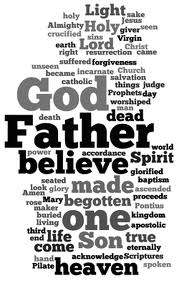
In church history we can clearly see that no human document has ever served a greater purpose in uniting Christians around a common faith than the Apostles’ Creed. It was confessed in one’s holy baptism, affirmed regularly by the whole gathered church and openly expressed essential Christianity for Christians everywhere.

The Apostles’ Creed has the pride of place in history as well as the clarity of true simplicity. There is plenty here to offend the sensibilities of almost all modern ideas and cultures, which makes it the perfect ancient-future faith way to establish fidelity and unity.

In the early church this creed provided a rather explicit response to three challenges.

The first challenge was to define the experience of Jesus within and […]
Does the Creed Really Matter?

By |2021-07-02T06:16:06-05:00November 6th, 2012|Categories: Creeds, The Church, Theology|

The outline of the Christian faith that we saw in Acts 2:14–36 (last week) provides a starting point for grasping the essential points of “the faith. We call this the kerygma, or the preached faith, of the earliest Christians. This is what they confessed and believed in order to be followers of “the Way,” or Christians. This underscores the importance of confessing the faith faithfully right down to the present day. As we’ve seen, we cannot talk about being faithful followers of Jesus without “the faith.”

What Matters Is Right Doctrine

Frequently people tell me that catholicity doesn’t matter. What matters, they argue, is right doctrine. They then argue that we get this right doctrine only by exegesis of the Bible alone. They insist that their church (or worse yet, they themselves) is right since they truly follow the Bible. Yet in many cases their church is less than two generations old. (This explains one reason why really important doctrines, like the Trinity, are not practically important in so many American churches and contemporary evangelical movements emerging in our time.) But all of this really begs an extremely […]

More on the Catholic Synod on Evangelization and the Future of ACT 3

By |2021-07-02T06:16:06-05:00November 5th, 2012|Categories: Evangelism, Missional-Ecumenism, Roman Catholicism|

The recent Catholic Synod of Bishops (October 7–28) dialogue on the new evangelization included a number of presentations by both Protestant guests and Catholic bishops. One of the more stirring and encouraging reports (most of these are short and can be quickly read in English at the Vatican site devoted to the synod) was given by the President of the Pontifical Council for the Promotion of New Evangelization, Salvatore Fisichella, the titular bishop of Voghenza:

The New Evangelization presents itself as a pastoral project which will engage the Church for the next generations. It is urgent that before “doing”, the foundation of our “being” Christian is rediscovered so that the NE is not experienced as an addition in a moment of crisis, but as a continuous mission of the Church. One must combine the need for unity, to go beyond fragmentation, with the richness of ecclesial and cultural traditions. Unity of a pastoral project, is not equated with uniformity of fulfillment; rather, it indicates the need for a common language and contributing symbols which make evident the journey of the whole Church more than […]

The Catholic Synod on Evangelization: New Signs of Global Missional-Ecumenism

By |2021-07-02T06:16:07-05:00November 2nd, 2012|Categories: Evangelism, Missional-Ecumenism, Roman Catholicism|

A much discussed Catholic Synod of Bishop, convened to address the issues and concerns of the new evangelization, took place in Rome between October 7–28. This synod was not, in and of itself, a hot item in the global news cycle. One reason is because few of the initiatives that will come from this dialogue will lead to political and social changes that most people care about. For me the exact opposite is the case.

John L. Allen, Jr., a keen observer of the Vatican, summarized this synod at the mid-way point (October 17) by writing the following on the National Catholic Reporter web site (October 19):

The Synod of Bishops on the new evangelization reached its halfway point Wednesday, with the “report after the discussion” by Cardinal Donald Wuerl of Washington, D.C., who’s serving as the relator, or general secretary. If nothing else, one has to give Wuerl credit for brevity — these reports are often sprawling, but he managed to summarize the discussion to date in a crisp 4,000 words.

The purpose of the relatio post disceptationem […]

Less Than One Week Until Our National Election

By |2021-07-02T06:16:07-05:00November 1st, 2012|Categories: America and Americanism, Politics|

Like most of you I am truly ready to move beyond the election season. November 6 cannot arrive too soon for my taste. As I have listened, watched and studied this particular election I would now like to reveal my decision.

1. I do plan to vote. Some months ago I was unsure about voting at all. I even expressed this to some friends. I am still not entirely enamored with the way our system works, at least at this point in our national history. I have read President George Washington’s warnings about the danger of two parties and see why he was concerned that we would devolve into such deep partisanship that our freedom and way of life could be lost. Blame both Republicans and Democrats if you will. Indeed, blame all the sides in this partisan context but in the end our present system fosters mistrust, even outright cynicism.

2. I have finally made up my mind. I will vote for the person who I think is best qualified to be a competent leader of the […]

Celebrating the Protestant Reformation

By |2021-07-02T06:16:07-05:00October 31st, 2012|Categories: Reformed Christianity, Roman Catholicism, The Church|

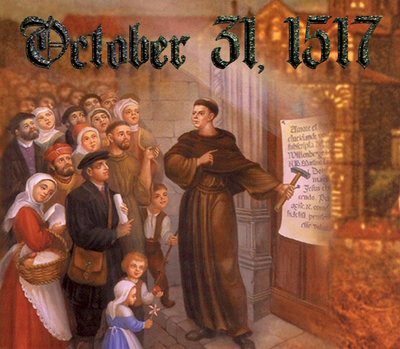
The first disciples of Christ were only later called Christians. Just so with those who were influenced by Martin Luther, John Calvin and Ulrich Zwingli. Only later were they called Protestants. The exact origin of the term protestant is unsure. It may come either from French protestant or German Protestant. What is certain is that both the French and German use of this word was derived from the Latin: protestantem. This Latin word literally meant “one who publicly declares/protests.”  I believe the best way to celebrate the Protestant Reformation (October is the “unofficial birthday”) is to regain this idea of “one who declares.” Let me explain.

Over time the term Protestant was eventually used to describe all groups protesting Roman Catholicism. Since that time, the term Protestant has been used in many different senses, often as a general term merely to signify non-Catholics who belong to neither of the Churches of Catholic tradition or the churches of the Christian East (Orthodoxy). This use still has a place, at least for historical reasons, but as the world is getting “smaller and smaller” these words […]

The Creed: An Outline of "The Faith" We Believe

By |2021-07-02T06:16:07-05:00October 30th, 2012|Categories: Creeds, The Church|

The two passages I mentioned in the Book of Acts yesterday were originally addressed to the Jews. They plainly take for granted the faith of the Old Testament and of Judaism. In addition to this obvious assumption, I believe that the following points summarize the core of apostolic faith and preaching:

1. There is one God, the creator and ruler of the world, who chose Israel to be his people and the agent of his saving purpose toward all mankind.

2. There is one Lord Jesus, the Christ (Messiah), the Son and Word of God, through whom all things were created, who was made man for our salvation, and dwelt among us.

  1. In him (Jesus Christ) God fulfilled his promises made by the prophets, for in the mighty words and works of his ministry, the kingdom of God was present and made manifest.
  2. According to the plan and foreknowledge of God, Jesus died to redeem us from sin and death, that we might receive salvation and eternal life.
  3. He was raised from the dead on the third day by the power […]

Why "The Faith" Matters

By |2012-10-29T04:00:25-05:00October 29th, 2012|Categories: Creeds, Faith|

The faith of the the Apostles is enshrined in the Gospels, outlined in their preaching in the Book of Acts and expounded and taught in their Epistles. Though there are different ways in which this faith is expressed, it is one and the same faith in all three accounts. This faith is common to the writings because they were written by apostles or close companions of the apostles.

Can We Discover “The Faith” in the New Testament Itself?

I believe you can discover a rather simple and straightforward outline of the apostolic faith by studying the preaching of Peter in Acts 2. Most exegetes of this text agree that this was not the “whole” sermon of Peter at Pentecost but rather an outline. Consider further the words we read in Acts 2:14–36:

14 Peter stood with the eleven apostles and spoke in a loud and clear voice to the crowd:

Friends and everyone else living in Jerusalem, listen carefully to what I have to say! 15 You are wrong to think that these people are drunk. After all, it is only nine o’clock in the morning. 16 But this is what God had […]

College Football Fever Has Hit My Home Again

By |2021-07-02T06:16:07-05:00October 27th, 2012|Categories: College Football|

With the resurgence of football at Notre Dame this season Irish fans are excited. I live in the center of Notre Dame hype and support in Chicago. These fans have every right to be thrilled with their team’s success and the obvious upgrade of their once floundering football program. I believe Notre Dame is great for tradition, even though in the more recent past they were often over-rated. People tend to love them or hate them but few real fans ignore them. Tonight they face a true test when they play Oklahoma in Norman, a tough road game if there ever was one. I expect the Irish to lose this evening but their defense is good enough to keep them in this game and give them a shot at a close win in the fourth quarter. If they win then they will then have a decent shot of playing for a national championship in January. (They still have to play and beat USC as well.) But true fans know better than to plan their schedule around […]

Social Media and the Future

By |2021-07-02T06:16:07-05:00October 26th, 2012|Categories: Social Networking, Uncategorized|

A new book by filmmaker and journalist Rory O’Connor–Friends, Followers and the Future: How Social Media are Changing Politics, Threatening Big Brands, and Killing Traditional Media (San Francisco: City Lights Books, 2012)–has helped me to better understand the impact of digital information and social networking as well as any book I’ve read in 2012. It is, to my thinking, an important book. It is current in its analysis. (This means that within a few years most of what is said will be completely outdated!) O’Connor’s thesis is simple: “There’s a revolution going on, as ever-accelerating developments in Internet technology change nearly every aspect of how we live, work, play, do business, and engage in politics” (cover text). I would add, for good measure, that these changes clearly impact faith, and sharing our faith publicly, whether we like it or not. As much as Gutenberg’s press changed the Christian mission in the sixteenth century so now the Internet, and the more recent rise of social media with it, are impacting the way people experience faith and understand […]