Blogs, Social Media and ACT3

By |2021-07-02T06:15:16-05:00August 13th, 2013|Categories: ACT 3, Personal|

batch003-039When I began to write my blogs eight years ago I had very little idea about what I was starting. I was not even sure that I would continue to write these posts for any length of time. Since then there have been a number of times when I was ready to give it up. (I think everyone who is honest will admit the same thing, especially about this kind of writing!)

Then Facebook and Twitter developed and I began to use them as well. Now I blog, at least four times a week or more, and I also post on Facebook and Twitter almost daily. While I find this medium to be fraught with dangers of both mind and heart I also find that they can be used for great good. I remain, for now at least, a committed blogger and also a user of the more popular forms of social media.

Yesterday I met with several people in Atlanta who I first “met” via the social media and my Internet blogging/writing. These are unique times when I […]

The Missional Paradigm and Effective Seminary Education

By |2021-07-02T06:15:16-05:00August 12th, 2013|Categories: American Evangelicalism, Culture, Discipleship, Kingdom of God, Leadership, Missional Church, Missional-Ecumenism, Pastoral Renewal, Renewal, The Christian Minister/Ministry, The Church, The Future|

371Last week I wrote several blogs on the state of theological education in North America. I suggested that seminaries need to adjust their mission to the rapidly changing context of the church in twenty-first century America. I further suggested that we need to teach theology and mission as integrated topics, not as separate or unrelated academic disciplines.

This story, told by Pastor Tim Ackley, demonstrates in a simple, compelling manner the value of getting a solid missional education. As you will readily see Tim received this kind of education at Biblical Theological Seminary in suburban Philadelphia. I have taught as an adjunct at Biblical Seminary and served on the seminary’s board. Biblical’s creative and effective educational experience is one that I wholeheartedly commend to anyone looking for a good missional model. You will get a strong, clear sense of the difference a clear vision of purpose can make on a pastor who is passionate about Christ’s kingdom and mission.

The Missional-Ecumenical Paradigm and Training Future Leaders

By |2021-07-02T06:15:16-05:00August 8th, 2013|Categories: Uncategorized|

featured_seminaryQuestions1I raised several questions on Monday about the future of seminary education in North America. The hard facts behind my question are not in serious debate:

  1. Seminary enrollment, on the whole, is in decline. This is especially true if you consider the data in view of the degree given to most students who are preparing to become pastors; i.e., the M.Div.
  2. Many seminaries now face serious problems, both financially and institutionally. If student tuition, to give but one example, must carry the burden of institutional survival then they will likely fail.
  3. A number of profoundly good questions are being asked about traditional forms of education. Can they deliver what they actually promise? Is this really the best way to prepare leaders for the Christian church in the twenty-first century?
  4. How do seminaries recruit students and, much more importantly, how do they decide the most important question of all: “Who should attend our school and thus be prepared for church leadership?” If money plays such a huge role in this entire process then is the fly in the ointment not obvious?

I believe […]

The Significant Decrease of White Americans and the Future of the Church

By |2021-07-02T06:15:16-05:00August 7th, 2013|Categories: American Evangelicalism, Culture, Current Affairs, Discipleship, Evangelism, Missional Church, Missional-Ecumenism, Renewal, The Church, The Future|

Bloomberg News, in a June 12 report in their online edition, notes:

The U.S. continued its transformation into a majority-minority nation last year, with Census Bureau data showing non-Hispanic whites making up the lowest percentage of the population in American history. (The Census Bureau counts what we traditionally call Caucasians to be non-Hispanic whites.)

images-2The estimates released on June 12 capture several milestones in the country’s demographic makeup. For the first time in more than a century, deaths outpaced births among white Americans. Almost half, 49.9 percent, of the nation’s children younger than 5 were minorities as of July 1. And the nation’s total minority population grew 21 times faster than whites. When I read that first sentence I had to stop and carefully read it again. As it settled in I began to think about the church in America before I thought of anything else. (I am a minister of the gospel, and a trained missiologist, thus I care deeply about the future of the church in America.) Read this very slowly: For the […]

Ethnography – Developing the Pastoral Skill of Mission

By |2021-07-02T06:15:17-05:00August 6th, 2013|Categories: American Evangelicalism, Culture, Current Affairs, Discipleship, Emergent Church, Evangelism, Kingdom of God, Missional Church, Missional-Ecumenism, Renewal, The Church, The Future|

monkimage.phpYesterday, I noted that Dr. Robert Price, associate professor of evangelism and urban ministry at Northern Seminary in Lombard (IL), says, “Ethnography is the pastoral skill of mission. Leaders need to be ‘participant observers,’ to get inside the story of the context, from whence we proclaim the gospel.” When I read this quote it grabbed my interest and then made me pause and ask, “What is ethnography?”

Ethnography is a qualitative form of research aimed at exploring cultural phenomena. The resulting field study, or a case report, reflects the knowledge and the system of meanings in the lives of a cultural group. Ethnography is a means by which we can represent graphically, and in writing, the culture of a particular people. It is rooted in empirical data gathered from human societies and cultures and is rooted in the discipline of anthropology. It has become popular in the social sciences in general, and in sociology and communication studies more specifically. It is the outgrowth of what we call the “soft sciences.” The goal of ethnography is to reflexively respond […]

Seminaries, Pastoral Training and the Future of the Church in North America

By |2021-07-02T06:15:17-05:00August 5th, 2013|Categories: ACT 3, American Evangelicalism, Church History, Current Affairs, Discipleship, Education, Missional Church, Missional-Ecumenism, Personal, Postmodernity, The Church, The Future|

monkimage-1.phpI visited the campus of Northern Seminary in nearby Lombard (IL) last week to meet with Greg Henson, the chief of institutional advancement for the school. Greg and I were connected by three mutual friends within the short span of three weeks. We felt it important to talk face-to-face since so many friends had suggested that we meet. Greg is a 31-year old innovative (Millennial) thinker who understands what is really happening to educational institutions in America. He also grasps how these changes are having a profound impact on all our seminaries. His daily work is to understand these changes and to help Northern adjust to the post-Christendom future. One of my partner ministries in the ACT3 Network routinely sends me to seminaries all over North America to recruit faculty for a summer training opportunity. As a result of this work I have visited something like 40-50 seminary campuses over the last 28 months. By asking a lot of questions, and by spending time with administrators, faculty and students, I have seen first-hand what is going on […]

Why Ecumenism Matters to Missional Church

By |2021-07-02T06:15:17-05:00August 2nd, 2013|Categories: ACT 3, American Evangelicalism, Church History, Church Tradition, Current Affairs, Discipleship, Emergent Church, Missional Church, Missional-Ecumenism, The Church, The Future, Unity of the Church|

imagesThe difficulties in the Methodist-Roman Catholic International Dialogue lie in the area of “instrumentality.” Catholics maintain that elements of teaching and ecclesial practice must be held in common before there can be “full communion.” Sister Lorelei Fuchs examines the central idea of church as koinonia from the perspective of both Methodism and the Catholic Church. She follows the line of thinking that I have seen bear fruit from first hand observation, namely that we need a model of the church that embraces both unity and diversity. Sister Lorelei challenges this Methodist-Catholic dialogue to move forward by dealing with unresolved issues in a way that embraces a unity and diversity paradigm.

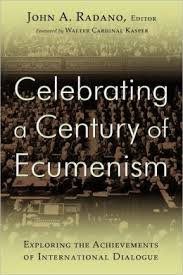
My good friend Jeffrey Gros, a leading Catholic ecumenist who has had a critical role in working with evangelicals, examines several critical ecumenical texts in the book Celebrating a Century of Ecumenism: The Fruits of One Hundred Years. Jeff says that “an exchange of theological views [is needed] in order to increase mutual understanding and to discover what theological ground they hold in common.”

For me this is the bottom […]

The Rise of Ecumenism and Why It Matters

By |2021-07-02T06:15:17-05:00August 1st, 2013|Categories: ACT 3, American Evangelicalism, Church History, Church Tradition, Current Affairs, Emergent Church, History, Kingdom of God, Missional Church, Missional-Ecumenism, The Church, The Future, Unity of the Church|

images-3A little over 100 years ago the World Missionary Conference in Edinburgh (1910) was a prophetic foretaste of a century-plus renewal of Christian ecumenism, a renewal that has proved to be quite substantial on many different levels. If the truth is told I believe we have made more progress than the participants at the famous Edinburgh Conference imagined at the time. I also believe the last century is a prelude to what is to come in the decades ahead.

We must begin by stating the obvious–full visible unity between the various Christian churches and denominations has not been realized. Nevertheless, Catholics, Protestants and the Orthodox have all found ways to reach new levels of understanding and mutual respect. Christians in the global Anglican Communion, to cite but one example, have made significant contributions as a via media (middle way). Even a growing number of voices within the Free Church communions have joined this dialogue. One could say that a rapprochement has been reached that would not have been seriously thought possible at Edinburgh.

The World Council of Churches (WCC), […]

The "god of American belief" Has Failed Us – Now What?

By |2021-07-02T06:15:17-05:00July 31st, 2013|Categories: ACT 3, American Evangelicalism, Church History, Church Tradition, Culture, Discipleship, Emergent Church, Missional Church, Missional-Ecumenism, Renewal, The Church, The Future|

images-2America did not need an established church (i.e., a state church wedded to public practice) because the everyday habits of Americans assumed the establishment of the Christian church. This assumption has become our biggest problem since the Millennials have come of age. This new generation no longer assumes the church or the public role of religion. They are spiritual questers but not religious in the normal American sense. This is why I meet more and more people my own age (55+) who say, with great emotion and sadness, “I love Jesus very much but I no longer pay any attention to the church. It simply doesn’t seem relevant to my faith journey.”

As a result of significant historical developments Americans continue to have an abiding belief in this god. The god they believe in is really the god of American thought and imagination. This god does not require much of American believers nor does he/she/it connect people deeply to community, thus to anything like the (visible) church. Stanley Hauerwas adds, “To know or worship that god does not […]

The Missional Perspective and Its Meaning for the Church in North America

By |2021-07-02T06:15:17-05:00July 30th, 2013|Categories: ACT 3, America and Americanism, Church History, Culture, Discipleship, Emergent Church, Kingdom of God, Missional Church, Missional-Ecumenism, The Church, The Future|

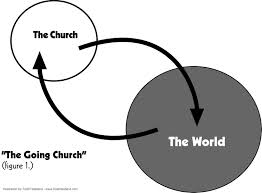
A_Missional_PerspectiveA theology of the church that confesses the Christian community to be missio Dei (mission of God) means that the church is much more than a voluntary association of members joined by various means and methods. It is – “the household of God” – the place where Christ dwells by the Spirit with his people upon the earth. When this understanding of the church is rightly grasped the church can never settle for the role of chaplain to society or the vendor of religious goods and services. It certainly cannot exist to serve the consumer’s needs by recruiting potential members.

Missional theology, when correctly understood as a way of seeing the church missio Dei, sees the church as an alternative community that witnesses corporately by living as the new community in the power of the Spirit. The church exists for others, not for itself. It is mission before it even thinks about “doing” mission. Read that sentence again. We have thought of mission as something the church does for many centuries. A fundamental difference between missional thinking […]